Nothing transforms a bathroom quite like a well-designed wet room. These seamless, open-concept bathing spaces have revolutionized bathroom design by merging shower areas with the rest of the room in a single, cohesive layout. If you’ve noticed water pooling near your shower door or feel cramped in your current bathroom, a wet room solution could be your answer. Over 65% of homeowners who convert to wet rooms report significantly improved daily bathroom experiences, citing easier cleaning and a more luxurious feel. This guide delivers actionable wet room bath ideas that solve common problems while creating stunning spaces you’ll love for years.
Why Your Small Bathroom Needs a Curbless Wet Room Design
Curbless wet room designs eliminate the traditional shower threshold, creating smooth transitions that make compact bathrooms feel larger and more accessible. Unlike conventional shower enclosures that eat up valuable square footage with doors and frames, curbless designs maximize every inch of space while providing universal access for all ages and abilities.
The secret to successful curbless wet rooms lies in precise floor gradient calculations. Professional installers create a subtle 2% slope toward the drain—just enough to direct water flow without being noticeable underfoot. This engineering detail prevents water from spreading into dry areas while maintaining the seamless aesthetic that defines modern wet rooms.
For optimal performance in small spaces, pair your curbless design with a linear drain along one wall instead of a center drain. This strategic placement allows for more flexible shower positioning and creates clean sightlines that enhance the perception of space. Choose a drain finish that complements your fixtures—matte black for contemporary spaces or brushed brass for warmer aesthetics.
Tile Selection Secrets for Wet Room Durability and Style
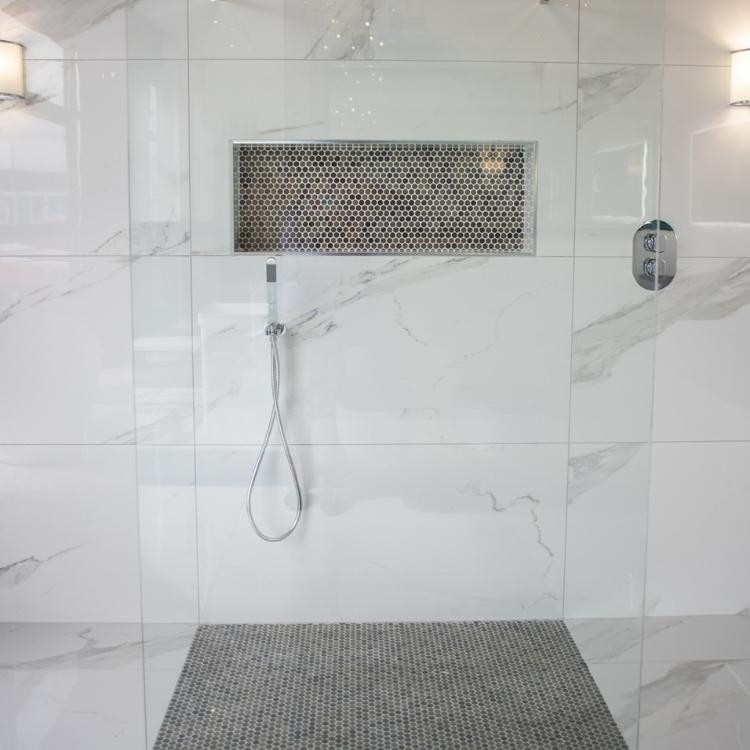
Your tile choice dramatically impacts both the longevity and visual impact of your wet room. Porcelain tiles have become the gold standard for wet areas due to their near-zero water absorption rate and exceptional durability. Large-format porcelain panels measuring 24×48 inches or larger minimize grout lines, reducing maintenance while creating that coveted seamless look.
Natural stone brings undeniable luxury but requires careful consideration. Marble offers timeless elegance with its distinctive veining, but needs regular sealing to prevent staining. For higher-traffic wet rooms, consider porcelain tiles that mimic natural stone—modern manufacturing creates incredibly realistic alternatives that withstand daily use without maintenance headaches.
Don’t overlook the slip resistance factor when selecting wet room tiles. Look for tiles rated R10 or higher on the anti-slip scale, especially for floor applications. Textured finishes, mosaic patterns, and matte surfaces all provide better traction than perfectly smooth options. Test samples by wetting them and walking on them before committing to your selection.
Smart Tile Layout Techniques for Visual Impact
Strategic tile placement can transform your wet room from ordinary to extraordinary. Consider these professional techniques:
- Directional patterns: Lay rectangular tiles vertically to create the illusion of higher ceilings
- Accent bands: Use contrasting mosaic tiles at shoulder height to break up large wall areas
- Floor inlays: Create subtle geometric patterns with darker tiles to define the shower zone
- Waterfall effect: Continue wall tiles down onto the floor for seamless visual flow
Space-Maximizing Wet Room Layouts for Compact Bathrooms
:max_bytes(150000):strip_icc()/Tomtebogatanhaaglayes-2c7cf60523cc430a86be4634cf6250c5-afb82cd9acbd4a3f8d243322efa40c21.jpg)
When square footage is limited, every element in your wet room must serve multiple purposes. Corner shower configurations make brilliant use of often-wasted space while leaving the room’s center clear for movement. Quadrant-shaped enclosures with curved glass panels soften the visual impact and prevent the room from feeling cramped.
Wall-mounted fixtures provide immediate space savings in small wet rooms. Floating toilets eliminate bulky cisterns, while wall-hung vanities create visual breathing room beneath. The space-saving benefits extend beyond aesthetics—these installations also make floor cleaning significantly easier, reducing maintenance time by up to 40%.
Partial glass partitions offer the perfect compromise between water containment and spatial openness. Instead of enclosing the entire shower area, install a single frameless panel that blocks splash zones while preserving sightlines. This solution works particularly well when positioned to protect the vanity area from direct spray.
Lighting Strategies That Elevate Wet Room Ambiance
Proper lighting transforms functional wet rooms into atmospheric retreats. Recessed LED downlights with IP65+ ratings provide essential task lighting while withstanding steam and moisture. Arrange these fixtures in a grid pattern rather than clustering them over the shower to ensure even illumination throughout the space.
Backlit mirrors serve dual purposes as both functional grooming tools and atmospheric elements. LED strips concealed behind mirror frames create shadow-free illumination perfect for makeup application, while some premium models offer color temperature adjustment from energizing cool tones to relaxing warm hues. The reflected light also makes the space feel significantly larger.
For evening relaxation, incorporate subtle ambient lighting at multiple levels. Consider these options:
- Floor-level cove lighting that washes walls with soft glow
- Recessed niche lighting to highlight decorative tiles
- Towel warmer lighting that creates warm focal points
- Color-changing LED strips under floating vanities
Color Psychology in Wet Room Design
Your color choices directly impact how you experience your wet room daily. Neutral palettes featuring whites, creams, and soft grays maximize light reflection and create serene backdrops that never feel dated. These timeless schemes work particularly well in north-facing bathrooms with limited natural light.
Dark color schemes introduce dramatic sophistication to wet rooms with ample square footage and good ventilation. Charcoal floors paired with matte black fixtures create moody, spa-like atmospheres, but require careful balancing with lighter elements to prevent the space from feeling oppressive. Reserve dark schemes for master bathrooms rather than small guest facilities.
Green-infused palettes connect wet rooms to biophilic design principles, bringing organic warmth to otherwise sleek spaces. Consider these approaches:
- Sage green accent tiles paired with natural wood elements
- Moss-colored mosaic bands that mimic forest floors
- Living walls featuring humidity-loving ferns and orchids
- Stone textures with subtle green veining for natural variation
Essential Fixtures for Luxury Wet Room Experiences

Your shower system defines the wet room experience more than any other element. Thermostatic mixers ensure consistent temperature control regardless of other water usage in your home—a critical safety feature for households with children. Digital shower systems with programmable settings take personalization further, remembering individual preferences for true luxury.
Rainfall shower heads have become the signature feature of premium wet rooms. For authentic spa-like experiences, select heads with at least 10 inches diameter positioned at ceiling height. Pair your rainfall fixture with a handheld wand on a slide bar for flexible cleaning and practical use—this combination delivers both luxury and functionality.
Fixture finishes significantly impact your wet room’s personality. While chrome remains popular for its versatility, consider these trending alternatives:
- Brushed brass for warm, inviting spaces
- Matte black for contemporary contrast
- Satin nickel for subtle sophistication
- Polished gold for statement luxury
Waterproofing Fundamentals Every Homeowner Should Know
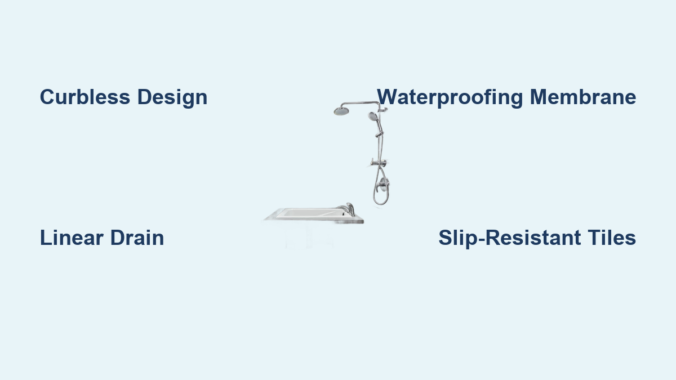
Linear drains represent one of the most important wet room innovations, replacing traditional center drains with sleek channel systems along walls. These elongated drains handle high water volumes efficiently while enabling the subtle floor gradients necessary for curbless designs. Choose stainless steel models with removable grates for easy maintenance.
The waterproofing membrane forms your wet room’s invisible foundation—compromise here leads to catastrophic failures. Modern liquid-applied membranes create seamless barriers that accommodate building movement without cracking. Professional installation is non-negotiable; waterproofing failures cause structural damage that far exceeds initial installation costs.
Annual sealant maintenance prevents expensive water damage in wet rooms. Silicone seals around fixtures, glass panels, and floor-wall junctions should be inspected for signs of mould, cracking, or separation. Replace failing seals immediately—waiting allows moisture to penetrate substrates where damage becomes invisible and extensive.
Personal Touches That Make Your Wet Room Unique
Freestanding bathtubs transform functional wet rooms into luxurious personal retreats, serving as dramatic focal points in larger designs. Position your tub away from walls for 360-degree visual appeal, and select materials that complement your overall scheme—stone resin for contemporary spaces or cast iron for traditional charm.
Strategic plant placement brings life to wet rooms without compromising functionality. Ferns, orchids, and air plants thrive in humid environments, adding organic elements that soften hard surfaces. Place plants on floating shelves away from direct shower spray, and ensure adequate ventilation to prevent excess moisture damage.
Custom cabinetry reflects your personal style while maximizing storage. Consider locally made or bespoke pieces for unique wet room bath ideas that standard fixtures can’t achieve. Quality materials and craftsmanship ensure longevity in the demanding wet room environment—invest in solid wood cores with marine-grade finishes.
Smart Maintenance Practices for Long-Lasting Wet Rooms
Effective ventilation prevents moisture damage and mold growth in wet rooms. Extractor fans rated for bathroom use should run continuously or with humidity sensors that activate automatically. Proper ventilation reduces maintenance time by preventing limescale buildup and mold formation.
Daily squeegeeing of glass surfaces prevents hard water staining and limescale accumulation. Keep a dedicated squeegee mounted near the shower exit for quick use after each session. This simple 30-second habit extends the time between deep cleaning sessions by months.
Weekly cleaning routines maintain your wet room’s appearance without damaging surfaces. Use pH-neutral cleaners specifically formulated for bathroom surfaces—avoid vinegar-based solutions that can degrade grout and stone sealants over time. Focus on high-moisture areas where mold tends to begin forming.
Professional inspections every 18-24 months catch potential issues before they become major problems. Certified wet room specialists can identify early signs of waterproofing failure, drainage issues, or fixture wear that homeowners often miss. This preventative maintenance extends your wet room’s lifespan by 5-7 years on average.
Wet room bath ideas offer remarkable versatility for homeowners seeking modern, functional bathroom spaces. From compact corner solutions to expansive luxury designs, the right wet room transforms daily routines into everyday indulgence. Prioritize quality waterproofing, thoughtful drainage, and materials that balance aesthetics with durability to create spaces that perform beautifully for years. Whether you prefer sleek minimalism or spa-like opulence, these design principles ensure your wet room delivers both style and substance in equal measure. Start planning your transformation today—your perfect bathroom experience awaits.
Leave a Reply