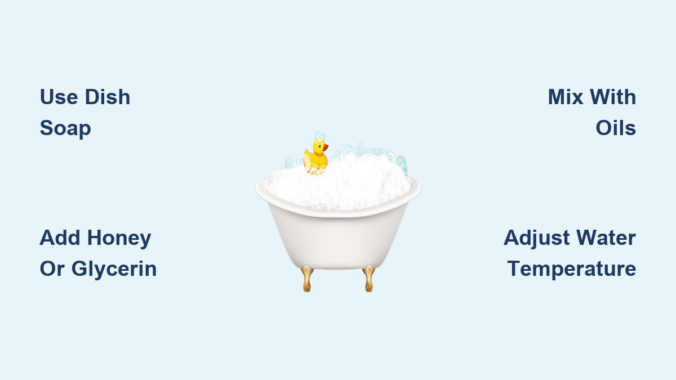
There’s nothing quite like sinking into a warm bath surrounded by fluffy, luxurious bubbles—but what if you’ve run out of commercial bubble bath? Rather than rushing to the store, you can create satisfying bubbles using ingredients already in your home. Learning how to make bubble bath without bubble soap saves money, avoids harsh chemicals, and lets you customize your bathing experience with natural ingredients you control. This guide reveals practical methods for creating impressive bubbles using everyday household products, so you can enjoy a spa-like soak anytime without specialized products.
Why Commercial Bubble Bath Isn’t Your Only Option
Most store-bought bubble baths contain sodium lauryl sulfate (SLS) and synthetic fragrances that strip natural oils from your skin, causing dryness and irritation. These products also come with significant environmental costs from plastic packaging and chemical runoff. By learning how to make bubble bath without bubble soap, you eliminate these concerns while saving money—homemade versions cost pennies per bath compared to $8-$20 for commercial bottles. The best part? You likely have everything needed right now in your kitchen or bathroom.
Essential Household Ingredients That Create Bubbles
Dish Soap Bubble Method
Dish soap makes one of the most effective bubble bath alternatives because it’s specifically formulated to create abundant foam. Choose a mild formula like Dawn or Seventh Generation without heavy degreasers. For a single bath, combine ¼ cup dish soap with 1 tablespoon honey or glycerin (to extend bubble life) and 1 tablespoon melted coconut oil (for skin softening). Add 2-3 drops of essential oil if desired. Pour this mixture under running warm bath water at full flow, moving your hand through the stream to maximize bubble formation. This simple approach creates bubbles that last 30+ minutes—far longer than dish soap alone.
Baby Shampoo Alternative
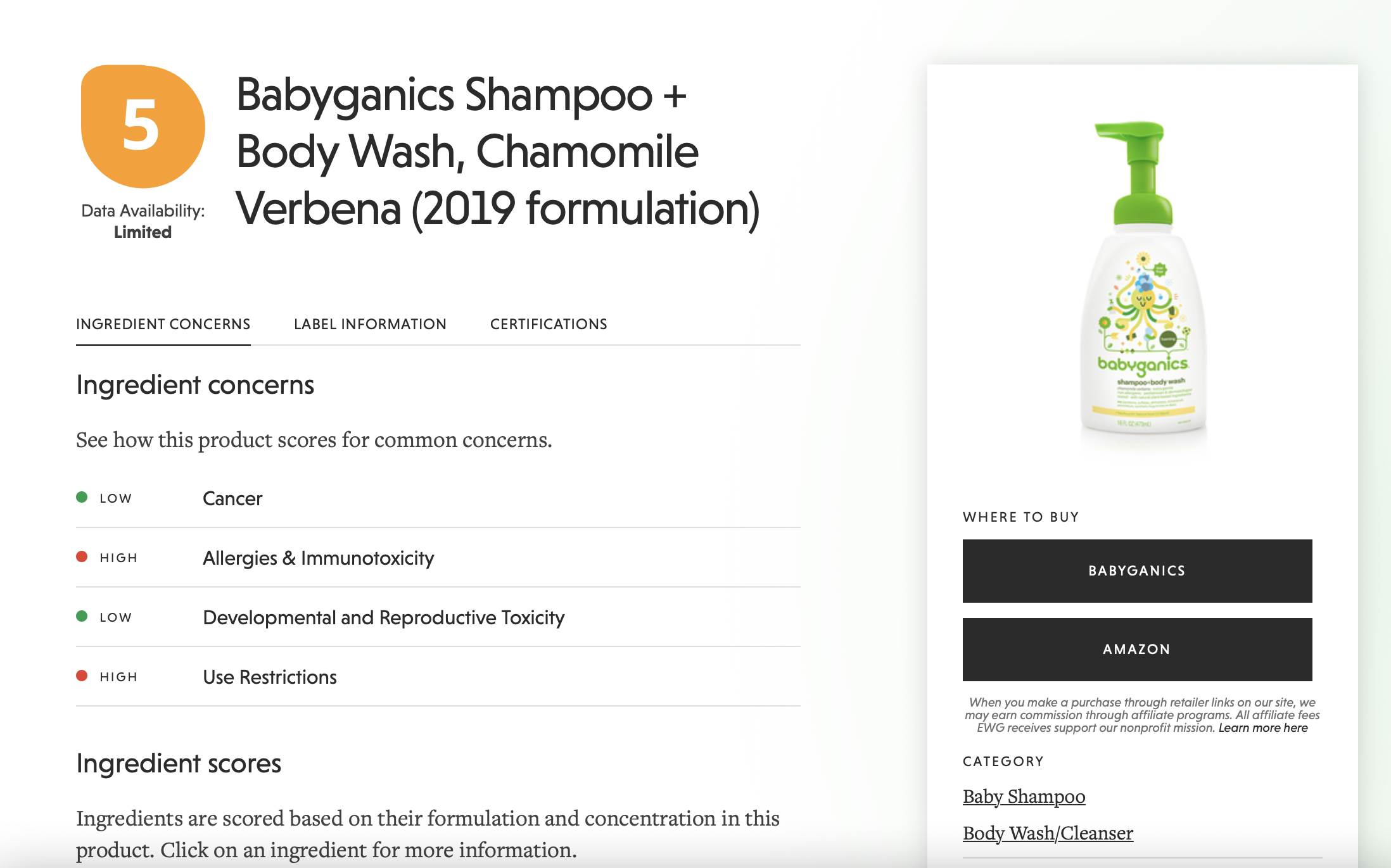
Baby shampoo provides the gentlest option for sensitive skin while still delivering good foam. Mix ½ cup fragrance-free baby shampoo with ¼ cup water, 2 tablespoons vegetable glycerin, and 1 tablespoon sweet almond oil in a jar. Shake gently to combine (avoid vigorous shaking that creates premature foam). Add two to three capfuls under running bath water to create moderate, long-lasting bubbles perfect for children or those with delicate skin. Unlike commercial bubble baths, this formula won’t cause redness or irritation while still providing that satisfying foamy experience.
Castile Soap Luxury Formula
For a truly spa-like experience, liquid castile soap creates stable bubbles while nourishing your skin. Combine ¼ cup unscented castile soap with 2 tablespoons raw honey (warmed slightly for easier mixing), 2 tablespoons jojoba oil, 1 tablespoon vegetable glycerin, and 5-10 drops of lavender essential oil in a bottle. Shake well to emulsify, then store in a cool, dark place. Use two to three tablespoons per bath added under running water. This recipe leaves skin exceptionally soft and works particularly well for dry or mature complexions needing extra moisture during bathing.
Creating Bubbles Without Traditional Soap Products
Milk and Honey Soak Alternative
This ancient bathing method produces a creamy, subtly frothy experience without synthetic surfactants. Add 2 cups whole milk or powdered milk to running bath water, ensuring it disperses fully. Warm 2-3 tablespoons honey and drizzle into the bath along with 1 tablespoon olive oil. Agitate the water periodically to create a luxurious, skin-softening soak. The lactic acid in milk provides gentle exfoliation while honey and oil deeply moisturize—perfect for those seeking a natural bathing ritual without traditional bubbles.
Baking Soda and Oil Combination
Dissolve ½ cup baking soda in warm bath water first, then add ¼ cup melted coconut oil and 10-15 drops of your favorite essential oil. Vigorously agitate the water with your hand to create a frothy, oil-infused soak. While this method doesn’t produce fluffy soap bubbles, it creates a silky water texture that feels indulgent while softening skin remarkably. The baking soda also helps neutralize bath water minerals that can cause irritation, making this an excellent choice when you’ve run out of bubble bath but still want a pampering soak.
Proven Tips for Long-Lasting Bubbles
Water temperature dramatically affects bubble longevity—hot water causes bubbles to pop quickly while warm water (100°F-105°F) maintains foam much longer. Pour your bubble mixture under running water at maximum flow with the faucet positioned to create maximum turbulence, then allow the water to run for another minute while moving your hand through the stream to incorporate air.
Hard water kills bubbles rapidly, so add ¼ cup baking soda to your bath first to soften the water and extend bubble life. Avoid using excessive oils, as they coat bubble surfaces and cause collapse—save heavy oil treatments for post-bath application. For maximum bubble longevity, steam up your bathroom first by running a hot shower, as humid air helps bubbles survive much longer than dry conditions.
Kid-Friendly Bubble Bath Solutions
Children love bubble baths but need gentler formulations. Create a tear-free children’s bubble bath by combining ¼ cup fragrance-free baby shampoo, ¼ cup water, 1 tablespoon glycerin, and 1 tablespoon melted coconut oil in a squeeze bottle. Add two to three tablespoons under running bath water (away from children’s eyes) for safe, satisfying bubbles. For older kids who can safely use essential oils, add natural colorants like beet juice for pink or blueberry juice for blue, using only small amounts to avoid staining.
Maximize fun with bubble bath games—provide cups and spoons for bubble tower building, draw pictures in the bubbles before they pop, or have bubble-blowing contests using plastic wands. These activities extend bath time naturally while keeping children engaged and happy.
Solutions for Sensitive Skin and Skin Conditions

Those with eczema or psoriasis need special considerations. For eczema-prone skin, avoid all essential oils and use this gentle formula: ¼ cup fragrance-free baby shampoo, ¼ cup colloidal oatmeal (in a muslin bag), 1 tablespoon glycerin, and 1 tablespoon plain unsweetened yogurt. The oatmeal soothes itching while yogurt provides gentle exfoliation without irritation. Limit baths to 15-20 minutes as prolonged water exposure can worsen eczema.
For fragrance sensitivities, omit essential oils entirely or use dried lavender or chamomile flowers in a muslin bag for gentle, natural scent. Those with psoriasis benefit from adding Epsom salts or Dead Sea salt to any bubble bath recipe—one to two cups per bath helps loosen scales while providing moisture.
Troubleshooting Common Bubble Bath Problems
No bubbles appearing? Check your water flow—faucets at full flow create maximum bubbles. Ensure your mixture contains actual surfactants (dish soap, shampoo, or castile soap), and try adding baking soda first to soften hard water. Bubbles disappearing too quickly? Your water may be too hot—let it cool slightly. Increase glycerin or honey quantities to stabilize bubbles, and reduce oil amounts as excess oil breaks bubble surfaces.
Skin feeling tight after bathing? Reduce surfactant quantities and increase moisturizing ingredients. Apply body oil immediately after bathing to lock in moisture. If bubbles feel greasy, reduce oil quantities in your recipe or switch to lighter oils like sweet almond instead of coconut oil. Mixture separating in storage? This is normal—shake well before each use to recombine ingredients.
Cost Comparison: Homemade vs. Commercial Bubble Bath
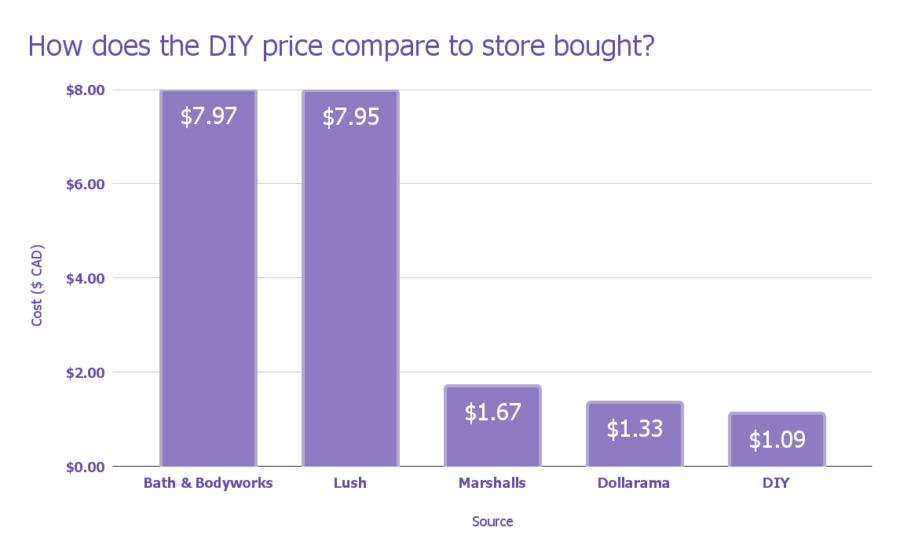
Commercial bubble bath costs average $10-$15 per bottle, providing just six to twelve baths—roughly $1-$2 per soak. In contrast, a basic homemade recipe costs just 15-20 cents per bath using common ingredients. Even more elaborate recipes with specialty oils rarely exceed 50 cents per bath. Initial investments in glycerin or essential oils pay off quickly: a $10 bottle of vegetable glycerin makes 20-30 batches, while essential oils require only drops per bath.
For families with children who enjoy bubble baths three times weekly, homemade versions save $100-$250 annually compared to store-bought products. Beyond cost savings, you gain complete control over ingredients, eliminate plastic packaging waste, and avoid synthetic chemicals that linger in waterways after your bath.
Final Tips for the Perfect Bubble Bath Experience
Enhance your homemade bubble bath with simple additions that transform it into a complete self-care ritual. Create spa-like ambiance with dim lighting or battery-operated fairy lights. Use a waterproof Bluetooth speaker for calming music that complements your soak. Keep a pitcher of warm water nearby to top up as bath water cools, extending your experience without disrupting the bubble layer.
Apply body lotion within three minutes of exiting the tub to lock in moisture for maximum skin benefits. For better sleep, take your bubble bath 1-2 hours before bedtime to capitalize on the warming and subsequent cooling cycle. Morning baths work best earlier in the day, giving your body time to warm up before starting your activities.
Creating satisfying bubbles without commercial products proves surprisingly simple with the right techniques. Most households already contain everything needed—just a gentle soap alternative, humectant like honey or glycerin, and perhaps a favorite essential oil. These basic ingredients combine to produce bubbles rivaling store-bought versions while giving you complete control over what touches your skin. Try one of these methods tonight and discover how easy and rewarding it is to make bubble bath without bubble soap.
Leave a Reply