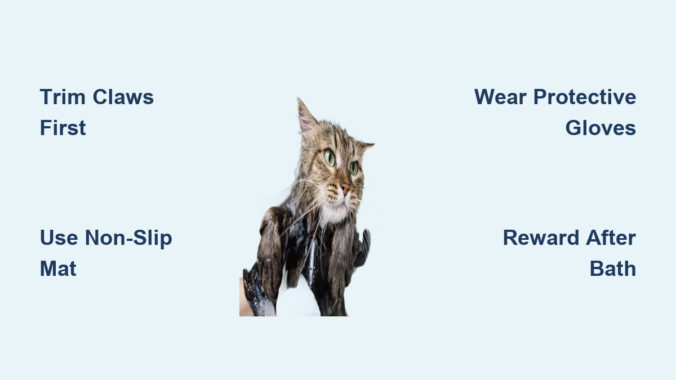
Bathing a cat ranks among the most challenging tasks any cat owner faces, and the presence of sharp claws only amplifies the difficulty. Unlike dogs, most cats have an innate aversion to water, and when you add the risk of deep scratches to the equation, bath time can quickly become a stressful ordeal for both you and your feline companion. However, certain situations make bathing unavoidable—whether your cat has gotten into something sticky, is dealing with a skin condition, or simply needs a good de-shedding session. The good news is that with proper preparation, the right techniques, and a calm approach, you can successfully bathe a clawed cat while minimizing stress and avoiding injury to yourself.
This comprehensive guide walks you through every step of the process, from pre-bath preparation to post-bath grooming. You’ll learn how to protect yourself from scratches, keep your cat as calm as possible, and establish routines that make future baths less traumatic for everyone involved. The key lies in treating bath time not as a battle to be won, but as a collaborative process that requires patience, preparation, and an understanding of your cat’s individual temperament and body language.
Trim Claws Before Bath Day to Reduce Scratch Risk
Blunting your cat’s claws one to two days before bath time dramatically reduces your risk of painful scratches. Never trim claws immediately before bathing, as this can make your cat’s paws sore and increase their anxiety during the water session. Instead, schedule claw trimming during a naturally calm moment, like after your cat has eaten or while they’re drowsy from sunbathing.
Proper claw trimming technique requires specific tools and careful handling. Use sharp cat nail clippers designed for feline anatomy—human clippers can crush the nail and cause pain. When trimming, gently press each toe pad to extend the claw, then cut only the transparent tip while avoiding the pink quick (which contains blood vessels). If you accidentally nick the quick, apply styptic powder immediately to stop bleeding. For cats who resist trimming, wrap them securely in a towel with only one paw exposed at a time, and reward calm behavior with treats.
Timing is critical—trimming too close to bath time leaves no recovery period, while trimming too early means claws may regrow sharp tips. The one-to-two-day window provides the perfect balance of safety and comfort for your cat. If your cat absolutely won’t tolerate claw trimming, skip this step and rely on other protective measures, but understand that the risk of scratches increases significantly.
Gather Essential Bath Supplies Before Bringing in Your Cat

Never start the bathing process without having every item within arm’s reach. A chaotic scramble for forgotten supplies during bath time escalates your cat’s anxiety and increases your risk of injury. Your essential supply list must include:
- Cat-specific shampoo (human or dog products can irritate sensitive feline skin)
- Non-slip mat for the sink or tub bottom (slippery surfaces trigger desperate clawing)
- Thick absorbent towels (at least three for drying)
- Cup or handheld sprayer with gentle water flow
- Long-sleeved clothing and protective gloves for yourself
- High-value treats to reward calm behavior
- Treat-dispensing toy to create positive associations
Pro tip: Run warm water through the tub before bringing your cat in to warm the surface—cold porcelain terrifies cats and makes them more likely to struggle. Keep the water depth minimal (just 3-4 inches) and maintain a temperature between 100-102°F, which feels comfortable to cats. Having everything prepared means you can focus entirely on your cat’s needs without leaving them unattended for even a moment.
Create a Calm Bathing Environment to Reduce Cat Stress
Cats sense your anxiety and react to environmental stressors, so preparing the space before bringing your cat in is crucial. Start by closing all bathroom doors and windows to prevent escape attempts, then eliminate loud noises by turning off fans and exhaust systems. The ambient room temperature should be warm (75-80°F), especially for short-haired cats who chill quickly when wet.
Strategic environmental adjustments make a dramatic difference:
– Play calming music or white noise to mask unsettling sounds
– Apply feline pheromone spray to towels 15 minutes before bath time
– Keep lighting soft rather than bright and harsh
– Place a non-slip mat in the tub to prevent desperate clawing for traction
– Run warm water briefly to heat the room before draining it
Your cat’s stress level directly correlates with their likelihood to scratch, so anything you can do to create a peaceful atmosphere pays dividends during the actual bathing process. Remember that cats perceive their environment differently than humans—they’re sensitive to smells, sounds, and visual cues that you might not even notice.
Use Proper Handling Techniques to Prevent Panic Reactions
How you physically manage your cat during the bath determines whether the experience remains manageable or escalates into a dangerous struggle. Support your cat’s body weight evenly with one hand while washing with the other, keeping them positioned sideways in the tub rather than facing you. This gives them a psychological sense of having an escape route, reducing the trapped feeling that triggers panic.
Critical handling tips:
– Never lift a wet cat by the scruff (causes pain and strain)
– Use the palm of your hand flat against their chest for support
– If your cat starts struggling, freeze rather than tightening your grip
– Speak in a low, calm monotone voice (high-pitched tones excite cats)
– Give brief breaks by holding them still in the warm water
Watch for early signs of escalating stress: flattened ears, twitching tail, dilated pupils, and low growling. When you notice these, pause briefly and let your cat assess the situation before continuing. This prevents manageable resistance from becoming full panic that requires restarting the entire process.
Protect Yourself During the Bath Process
Despite precautions, some scratches may occur when bathing a clawed cat. Strategic self-protection minimizes injury while allowing you to maintain control. Wear long sleeves made of thin, stretchy material that won’t restrict movement but creates a barrier between claws and skin. Keep your arms pressed close to your sides rather than reaching across your cat’s body, which puts your forearms in the direct line of fire if they kick backward.
When scratches happen:
– React calmly with a quiet “ouch” rather than sudden movements
– Continue the bath if possible (stopping reinforces aggressive behavior)
– Address scratches thoroughly afterward with soap, water, and antiseptic
– Never punish your cat for scratching (creates negative associations)
The most dangerous moments occur when lifting your cat in and out of the water, so take these transitions slowly while supporting their full body weight. If your cat has a history of aggressive behavior during baths, consider professional grooming instead of risking serious injury to yourself or your cat.
Wet and Shampoo Your Cat Correctly to Minimize Resistance
The washing process requires a gentle touch and strategic approach to sensitive areas. Begin by wetting your cat’s fur from the neck down using a cup or handheld sprayer with gentle pressure—never direct spray at their face. Pour water slowly over their body rather than spraying, and work quickly through this initial wetting phase, which typically triggers the most resistance.
Effective shampoo application:
– Dilute shampoo in water first, then pour over fur
– Use gentle, kneading motions rather than vigorous scrubbing
– Pay special attention to greasy areas (base of tail, chin, underside)
– Keep shampoo away from eyes, ears, and nose at all costs
– Rinse thoroughly to prevent skin irritation from residue
For cats who tolerate it, use a wet washcloth to gently wipe the face after the body is soaped. Work efficiently but carefully—prolonged bathing increases stress exponentially. Most cats require only 5-10 minutes of actual washing time when done correctly.
Rinse and Dry Your Cat Thoroughly to Prevent Skin Issues
Rinsing is where many cat baths go wrong, as extended handling time pushes already-stressed cats over the edge. Cup your free hand in front of the water stream to break its force and prevent direct contact with your cat’s face. Check for soapy residue by running your fingers through the fur, especially in armpits, groin, and skin folds where residue accumulates.
Effective drying techniques:
– Lift your cat immediately into a thick, absorbent towel
– Wrap them burrito-style, covering their head if tolerated
– Press gently to absorb water (never rub vigorously)
– Replace wet towels with dry ones as needed
– For tolerant cats, use a hair dryer on lowest setting at least 12 inches away
Keep your cat in a warm, draft-free room until completely dry—damp fur chills cats quickly. Brush gently while drying to prevent matting, especially for long-haired breeds. The drying process often calms cats significantly once they’re warm and no longer wet.
Make Future Baths Less Stressful Through Positive Reinforcement
Every bath shapes your cat’s expectations for the next one, so ending on a positive note creates progressively better experiences. Always follow baths with a special treat, favorite play session, or extended cuddle time—timing matters, as rewards should come immediately while the experience is fresh.
Long-term stress reduction strategies:
– Create consistent positive associations with bathing
– Never punish during or after baths (compounds negative associations)
– Determine if frequent baths are truly necessary (many cats rarely need them)
– Use regular brushing to reduce need for full baths
– Consider alternatives like dry shampoos or cat wipes for resistant cats
Cats don’t forget traumatic experiences easily, but they do form positive associations when baths end with relief and comfort. Over time, many cats become at least marginally more tolerant—not because they enjoy water, but because they’ve learned the experience ends and they remain safe.
Know When to Seek Professional Help for Cat Bathing
Some cats become so aggressive during baths that home bathing becomes genuinely dangerous. Recognize when you’ve reached this threshold—if your cat’s fear response includes uncontrolled aggression, escape attempts risking injury, or stress symptoms persisting hours after bathing, professional help is warranted.
Professional options include:
– Cat-specific groomers experienced with difficult felines
– Veterinary staff who can perform medicated baths
– Veterinarian-prescribed sedatives for essential baths
– Mobile grooming services that come to your home
Building a relationship with a trusted professional groomer saves you from repeated failed bath attempts that damage your bond with your cat. Sometimes the most responsible choice is acknowledging that certain tasks require professional expertise—your cat’s health and your safety are worth more than the pride of doing everything yourself.
Bathing a cat with claws is never ideal, but with proper preparation and technique, you can minimize stress and avoid injury. The key is approaching each bath as a learning experience, adapting to your cat’s individual needs, and knowing when professional help is the better option. With patience and practice, even the most water-averse cats can learn to tolerate necessary baths without turning bath time into a battle.
Leave a Reply