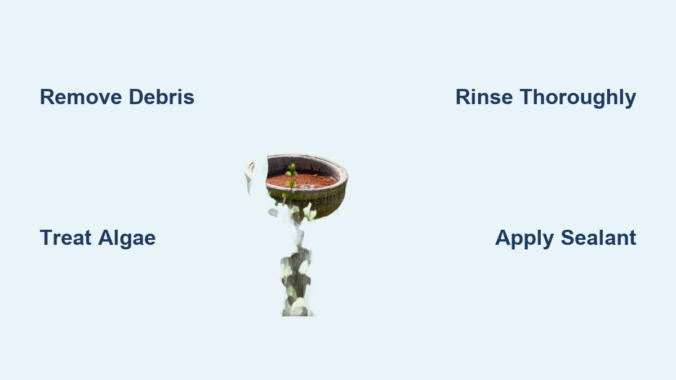
A neglected cement bird bath transforms from a garden jewel into a slippery hazard that drives away the very birds you want to attract. When algae coats the basin or mineral deposits form unsightly rings, your feathered visitors avoid the water source you’ve provided. Knowing how to clean cement bird bath surfaces properly revives this essential wildlife feature while protecting your investment. Unlike smoother materials, cement’s porous nature demands specific cleaning techniques to prevent damage while removing stubborn buildup. This guide delivers a comprehensive, step-by-step approach that restores even the most neglected cement bird bath to a clean, safe condition—without expensive professional services or harsh methods that accelerate deterioration.
Why Cement Bird Baths Need Special Cleaning Approach
Cement’s microscopic pores create the perfect environment for algae, bacteria, and mineral deposits to take root and thrive. Unlike glazed ceramic or metal bird baths, cement absorbs water deep into its structure, allowing contaminants to penetrate beyond surface level. This absorption leads to persistent green algae blooms that create dangerous slippery surfaces where birds can lose their footing. The same porosity that makes cement vulnerable to staining also means standard cleaning methods often fail—they remove surface discoloration while leaving embedded contaminants intact.
Hard water mineral deposits manifest as chalky white rings that cling stubbornly to cement surfaces, especially at the waterline where evaporation concentrates minerals. These deposits aren’t just unsightly—they create rough surfaces that accelerate wear during cleaning. Organic debris like leaves and bird droppings decompose on cement surfaces, releasing tannins that penetrate deep into the material, causing yellow or brown discoloration that regular scrubbing won’t remove. Without proper cleaning techniques, these issues compound over time, leading to permanent staining and structural weakening that shortens your bird bath’s lifespan.
Essential Tools for Cement Bird Bath Cleaning

Assembling the right tools before starting ensures efficient cleaning without damaging your bird bath. A stiff-bristled nylon brush with durable bristles penetrates cement pores without scratching, while a soft-bristled detail brush handles decorative elements. Rubber gloves protect your hands from cleaning solutions, and safety goggles prevent accidental splashes—especially important when using vinegar or oxygen bleach. A garden hose with adjustable nozzle provides controlled water pressure for rinsing without eroding cement surfaces.
Your cleaning solution arsenal should include white vinegar for mineral deposits, oxygen bleach for organic stains, and baking soda for gentle abrasive action. Commercial cement cleaners designed specifically for outdoor masonry offer powerful options for severe buildup but require careful handling. A plastic scraper helps remove dried debris without damaging cement surfaces, while a wet-dry vacuum or large sponge removes excess water during the drying phase. Most importantly, a high-quality masonry sealant completes your toolkit, creating a protective barrier against future staining.
Step-by-Step Cement Bird Bath Cleaning Process
Initial Debris Removal
Begin by scooping out standing water and disposing of it away from garden plants, as it may contain contaminants. Use a stiff brush to sweep away dried leaves, seed hulls, and bird droppings from the basin and pedestal, focusing on corners and decorative grooves where debris accumulates. For stubborn organic matter, a plastic scraper gently lifts material without scratching cement surfaces. Rinse thoroughly with your garden hose, directing water at an angle to push debris outward rather than deeper into crevices. This critical first step prevents you from grinding debris into cement pores during deeper cleaning.
Targeted Stain Treatment
Different stains require specific treatment approaches for optimal results. For green algae growth, mix one part oxygen bleach with four parts water and apply generously to affected areas. Let the solution dwell for 15-20 minutes to penetrate deep into cement pores before scrubbing with your stiff brush using firm circular motions. Oxygen bleach effectively kills algae without the harsh effects of chlorine bleach on cement surfaces. For white mineral deposits, apply undiluted white vinegar directly to the affected areas and allow it to sit for 10-15 minutes—the acid dissolves alkaline mineral buildup. Stubborn rust stains respond well to a paste of cream of tartar and water applied thickly and allowed to dry completely before rinsing.
Thorough Rinsing Protocol
Proper rinsing removes all traces of cleaning solutions and loosened contaminants that could harm visiting birds. Rinse multiple times with clean water, starting from the top and working downward to ensure complete coverage. Fill the basin with clean water and empty it three to four times, checking that rinse water runs clear before proceeding. Pay special attention to textured areas and the waterline where cleaning solutions tend to collect. Incomplete rinsing leaves residue that can interfere with sealant application and potentially harm birds.
Sealant Application for Long-Term Protection

Sealing your cleaned cement bird bath creates an invisible barrier that significantly reduces future staining and simplifies maintenance. Select a breathable masonry sealant specifically formulated for outdoor concrete applications—avoid film-forming sealants that create a glossy surface and eventually peel. Penetrating sealants absorb into the cement, providing durable protection while maintaining the natural appearance.
Apply sealant on a dry day with no rain forecast for at least 24 hours. Use a paintbrush to apply thin, even coats following the manufacturer’s recommended coverage rate—most sealants require two to three thin coats rather than one heavy application. Allow each coat to dry completely (typically two to four hours) before applying the next. The bird bath should remain dry for a minimum of 48 hours after the final coat to allow full curing before refilling with water. Properly sealed cement bird baths resist staining and require less frequent deep cleaning.
Maintenance Schedule for Ongoing Cleanliness
Preventative maintenance dramatically extends the time between deep cleaning sessions. Change the water every two to three days during warm weather to prevent algae growth—daily changes may be necessary during heat waves. Each time you refresh the water, give the basin a quick scrub with a stiff brush and water containing a splash of white vinegar to prevent mineral and algae buildup.
Perform a light cleaning every two to four weeks using a vinegar-water solution to maintain pristine condition. Inspect your sealant annually by sprinkling water on the surface—if it beads up, the sealant remains effective; if it soaks in immediately, it’s time to reapply. Schedule thorough deep cleanings twice yearly, typically in early spring before nesting season and again in late fall. This consistent maintenance prevents the rapid reaccumulation of stains that makes deep cleaning more difficult over time.
Troubleshooting Persistent Cement Bird Bath Issues

Slippery surfaces despite regular cleaning indicate residual biofilm that requires targeted treatment. Apply a solution of one part hydrogen peroxide to two parts water, let it dwell for 10 minutes, then scrub thoroughly—the oxidation action breaks down stubborn biofilm. For persistent slipperiness, lightly sand the surface with 120-grit sandpaper to remove the slick layer without damaging underlying cement.
Small cracks should be repaired immediately with hydraulic cement or concrete patching compound to prevent water penetration that accelerates deterioration. Clean the crack thoroughly before applying filler, and allow complete curing before refilling with water. White powdery residue (efflorescence) appears when salts migrate from within the cement to the surface—scrub with a vinegar solution and ensure proper sealing to prevent recurrence.
Final Maintenance Tips
A clean cement bird bath serves both aesthetic and ecological purposes in your garden. Proper cleaning techniques preserve the structural integrity of your bird bath while providing safe, healthy water sources for local birds. Remember that cement requires more maintenance than non-porous materials, but its natural appearance and durability make the extra effort worthwhile. The birds visiting your yard depend on reliable water sources, especially during extreme weather—keeping your bird bath clean ensures you’re providing safe hydration throughout the seasons.
Pro Tip: Place your cement bird bath in a location that receives morning sun but afternoon shade—this reduces algae growth while allowing birds to cool off during hot days. Position it near cover but with clear sightlines so birds feel safe from predators while bathing. With regular maintenance following this guide, your cement bird bath will remain a beautiful, functional garden feature for years to come.
Leave a Reply