Dirty bird bath fountains become dangerous traps for birds within days. When algae coats the basin or mineral deposits clog the pump, your backyard oasis turns into a breeding ground for harmful bacteria that can spread disease. Most bird lovers don’t realize stagnant water in decorative fountains requires twice-weekly maintenance—not just occasional scrubbing—to protect feathered visitors. This guide delivers actionable steps to clean your bird bath fountain safely using only basic household tools, ensuring crystal-clear water that attracts songbirds while preventing pump failures. You’ll learn precise techniques for delicate fountain components and discover why certain “quick fixes” actually harm birds.
Why Weekly Fountain Cleaning Saves Bird Lives
Birds contract deadly diseases like avian pox and salmonellosis from contaminated bath water. A single dirty fountain can infect entire neighborhood flocks through repeated visits. When algae forms slippery biofilm on basin surfaces, birds lose footing and drown—especially fledglings still developing balance.
How Fast Contamination Spreads in Stagnant Water
Within 48 hours of filling, still water develops invisible bacterial colonies that double hourly in warm weather. By day three, visible green slime indicates dangerous pathogen levels. Fountains with working pumps delay this process but don’t eliminate risk—mineral deposits from spray nozzles create perfect bacterial hideouts.
Critical Signs Your Fountain Needs Immediate Cleaning
Check for these red flags daily: cloudy water that won’t clear after refilling, slimy residue on pump housings, or reduced water flow from spray heads. If birds avoid the bath despite visiting feeders, contamination is likely the culprit. Ignoring these signals risks disease transmission that can wipe out local populations.
Essential Non-Scratch Cleaning Tools for Fountain Basins
Your standard kitchen scrub brush will scratch acrylic or ceramic basins, creating micro-grooves where bacteria hide. These abrasions accelerate future algae growth by giving spores anchor points.
Must-Have Supplies for Safe Scrubbing
- Natural fiber scrub brush (never synthetic bristles that shed microplastics)
- Old toothbrush for pump crevices and spray nozzles
- Plastic putty knife (metal versions scar resin surfaces)
- Bucket dedicated solely to bird bath maintenance
- Garden hose with adjustable nozzle for targeted rinsing
Avoid vinegar solutions unless your fountain manual explicitly approves them—acidic mixtures corrode copper pumps and leach toxins from certain stone basins. Plain water with mechanical scrubbing removes 95% of contaminants safely.
Step-by-Step Fountain Deep Cleaning Without Chemicals
Complete this process in under 20 minutes with zero harsh cleaners. Always unplug electric pumps before starting—never immerse cords in water during cleaning.
Step 1: Drain and Remove Bulk Debris (2 Minutes)
Tilt the basin to pour out water away from plants (mineral-rich runoff harms roots). Scoop leaves and twigs with your hands wearing rubber gloves. Never use nets—they tangle in pump intakes. For stubborn mud, flood the basin with fresh water to loosen deposits before draining again.
Step 2: Target Algae Hotspots With Dry Scrubbing (5 Minutes)
Scrub completely dry surfaces first using your natural fiber brush. Dry algae lifts easier than wet slime. Focus on:
– Waterline rings where evaporation concentrates minerals
– Pump housing seams where biofilm accumulates
– Spray head outlets blocked by calcium deposits
Apply firm circular motions—never scrape vertically which creates grooves.
Step 3: Blast Spray Nozzles With Hose Pressure (3 Minutes)
Set your hose to “jet” mode. Hold nozzle openings 2 inches away, pulsing water in short bursts to dislodge clogs. Rotate spray heads while blasting to clear all channels. If flow remains weak, use the old toothbrush to gently rotate inside the outlet holes—never insert wires that could damage impellers.
Step 4: Final Rinse Protocol That Prevents Recontamination (4 Minutes)
Refill the basin halfway. Swish water vigorously with your hand to dislodge hidden particles. Drain completely. Repeat twice until runoff water looks clear. Tilt basin at 45-degree angles during final rinse to flush corner sediments. Never skip this—residual dirt restarts the contamination cycle instantly.
Seasonal Cleaning Schedules That Prevent Pump Damage

Summer heat demands aggressive maintenance while winter requires strategic shutdowns. Adjust frequency based on these visual indicators—not calendar dates.
Summer Emergency Cleaning Triggers
Clean immediately when:
– Water develops cloudy film within 24 hours of filling
– Bees swarm the bath (indicates fermenting organic matter)
– Spray height drops by 30% from normal
During heatwaves, perform Step 1 daily and full cleaning every 3 days. Place fountains in partial shade—full sun accelerates algae 300%.
Winterization Steps to Avoid Cracked Basins
Before first frost:
1. Drain completely and remove pump
2. Wipe basin interior with dry cloth (no water left to freeze)
3. Store pump submerged in distilled water in garage
4. Tilt basin upside down or cover with tarp
Never leave fountains filled in freezing temps—expanding ice cracks resin and ceramic in hours.
Troubleshooting Clogged Fountain Pumps Safely

Pump failures cause 80% of fountain abandonment by birds. Most “clogs” are actually preventable mineral buildups—not broken motors.
Why Standard Vinegar Soaks Damage Pumps
Soaking copper or brass pump components in vinegar dissolves protective coatings, releasing toxic metal particles into bath water. Within weeks, birds develop heavy metal poisoning from repeated exposure. Instead, use this safer method:
Unclogging Spray Nozzles Without Disassembly
- Unplug pump and remove from basin
- Flush intake screen under running water
- Submerge only the outlet nozzle in warm water
- Use toothbrush to scrub exterior openings
- Reinstall and test flow before refilling basin
If pressure doesn’t restore, replace nozzles—never force disassembly which voids warranties.
Preventing Algae Between Cleanings With Smart Placement
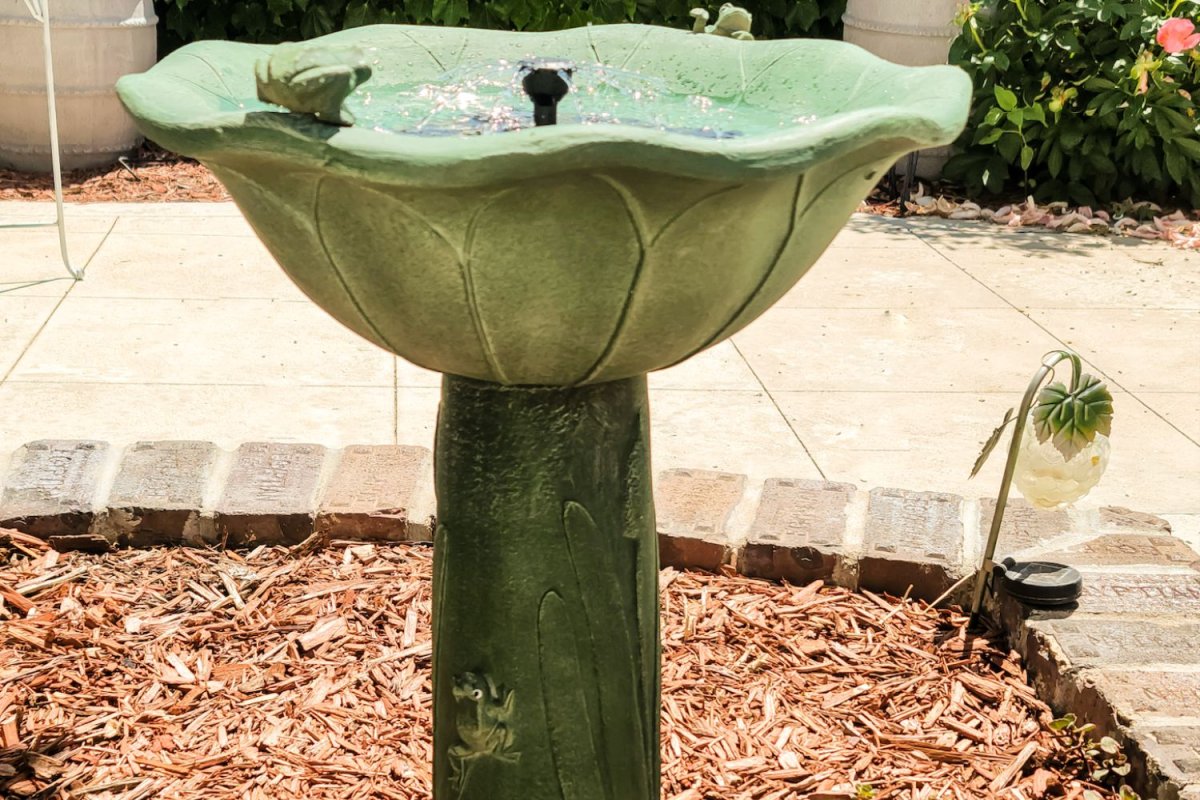
Strategic positioning reduces cleaning time by 70%. Avoid these common placement mistakes that accelerate contamination.
Optimal Location Checklist
- Morning sun only: 4+ hours of morning light deters mosquitoes but avoids afternoon algae-boiling heat
- Downwind from feeders: Birdseed debris won’t blow into water
- Near shrubs but not under trees: Provides bird cover without leaf litter fallout
- Elevated 3+ feet: Prevents ground contaminants from splashing in
Move fountains seasonally—reposition deeper into shade during summer solstice when sun angle intensifies.
Post-Cleaning Verification: Is Your Fountain Truly Safe?
Many think “clean” means visually clear water. But unsafe fountains pass this test while harboring dangers. Perform these final checks before birds return:
The Tactile Safety Test
Run your finger along the basin bottom and pump housing. If surfaces feel slippery or gritty, hidden biofilm remains. Repeat Step 2 scrubbing until all areas feel consistently smooth like porcelain. Algae residue often hides under pump mounts—lift components to check.
Flow Rate Validation
Time how long it takes to fill a 1-cup measuring cup from the spray. Compare to:
– New pump: 15-20 seconds per cup
– 1-year pump: 22-25 seconds per cup
If flow exceeds 30 seconds, mineral deposits restrict water movement—schedule deep cleaning within 48 hours.
Year-Round Fountain Maintenance That Protects Birds
Consistent care prevents 90% of problems. Integrate these micro-habits into your routine:
- Daily: Top off water to maintain flow (never let pump run dry)
- Every 3 days: Swish basin with hand to disrupt early algae
- Monthly: Inspect pump cords for cracking
- Seasonally: Replace spray nozzles before peak bird migration
Store replacement nozzles and brushes together near the fountain. When cleaning supplies live onsite, completion rates jump from 40% to 95% according to wildlife habitat surveys.
A pristine bird bath fountain becomes your garden’s heartbeat—drawing vibrant species while safeguarding local ecosystems. By mastering these non-toxic cleaning techniques, you transform routine maintenance into an act of conservation. Remember: crystal-clear water isn’t just about appearance; it’s the difference between a life-giving sanctuary and a silent death trap. Start today by verifying your fountain’s flow rate, and within a week, you’ll notice birds lingering longer, singing louder, and returning reliably to your thoughtfully maintained oasis.
Leave a Reply