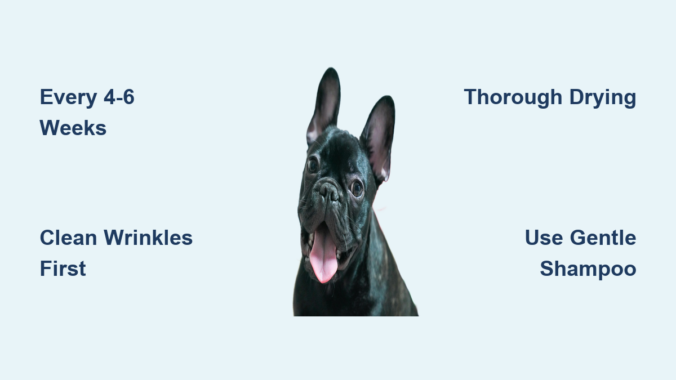
Your French Bulldog’s signature wrinkles and compact build create unique grooming challenges that many new owners overlook. Determining how often to bathe a Frenchie requires understanding their specific skin needs rather than following generic dog bathing advice. Bathe your Frenchie too frequently and you’ll strip essential oils, causing dryness and irritation that triggers even more oil production. Wait too long between baths and you’ll face odor issues and skin infections hiding in those adorable facial folds. For most healthy adult French Bulldogs, bathing every 4 to 6 weeks hits the sweet spot—enough to maintain cleanliness without compromising skin health. This guide reveals exactly how to establish a bathing schedule that keeps your Frenchie fresh, healthy, and comfortable year-round.
Ideal Bathing Frequency for Frenchies
Most healthy adult French Bulldogs thrive with bathing every 4 to 6 weeks, establishing this timeframe as the reliable baseline for typical Frenchie care. This interval strikes an effective balance between removing accumulated dirt, oils, and allergens while preserving the natural skin barrier that protects your dog from environmental threats. Frenchies possess a short, fine single coat that lies close to their body—a stark contrast to breeds with double coats that naturally repel dirt and moisture. This means regular bathing serves a genuine hygiene purpose rather than simply addressing surface-level cleanliness.
However, this 4-to-6-week window represents a starting point rather than a rigid rule. Your individual Frenchie’s optimal schedule depends on multiple interconnected factors including activity level, skin condition, environmental exposure, and seasonal changes. Some French Bulldogs may need bathing as frequently as every 3 weeks, particularly those who spend considerable time outdoors or have naturally oilier skin types. Others can comfortably extend to 8 weeks between baths, especially less active dogs living primarily indoors with minimal outdoor exposure on clean surfaces.
Puppies under 12 months require notably different protocols. Their more sensitive skin and developing temperature regulation capabilities mean baths should occur sparingly—typically no more than once monthly unless they’ve gotten into something particularly messy. Senior Frenchies often benefit from adjusted schedules as well, with some requiring more frequent bathing due to decreased mobility affecting their self-grooming abilities, while others need gentler treatment due to increasingly sensitive skin.
Activity Level Determines Bathing Schedule
Your Frenchie’s daily routine directly impacts how often to bathe them. Active French Bulldogs that spend substantial time outdoors, explore yards or parks regularly, or participate in vigorous play sessions accumulate dirt, debris, and allergens at accelerated rates. These dogs typically require bathing every 3 to 4 weeks to prevent odor buildup and skin irritation from trapped contaminants. Conversely, Frenchies with sedentary indoor lifestyles or those primarily walked on clean urban sidewalks can often extend comfortably to 6 or even 8 weeks between baths without compromising hygiene.
Watch for these activity-based indicators that signal it’s time for a bath:
– Visible dirt or grass stains on paws and belly
– Noticeable “doggy odor” after outdoor excursions
– Increased scratching after playing outside
– Pollen accumulation visible on coat during allergy seasons
The brachycephalic respiratory structure of French Bulldogs naturally limits extreme outdoor activity since they tire easily and struggle with temperature regulation. This actually simplifies the equation for many owners—their Frenchie simply doesn’t get dirty enough to need frequent bathing. Most Frenchies’ moderate activity levels make the standard 4-to-6-week schedule perfectly adequate.
Proper Frenchie Pre-Bath Preparation Steps
Proper preparation transforms bathing from a stressful ordeal into a manageable routine for both you and your Frenchie. Taking a few minutes before water touches your dog’s coat prevents common problems and ensures the bathing process proceeds efficiently.
Begin by thoroughly brushing your Frenchie’s coat with a suitable brush or grooming mitt. This step removes loose hair, surface dirt, and debris that would otherwise clump when wet and resist removal. While Frenchies rarely develop the matting common in long-haired breeds, their short coat still benefits from this preparatory brushing which allows shampoo to contact the skin more effectively. Pay particular attention to areas where the collar rests and where legs meet the body—these spots accumulate the most dead hair and debris.
The signature facial folds of French Bulldogs demand attention before bathing begins. Using a damp cloth or specialized wrinkle wipe, carefully clean each fold to remove any food particles, discharge, or debris trapped in the skin creases. This pre-bath wrinkle cleaning prevents muddy water during the bath and ensures soap doesn’t trap contaminants against sensitive skin. Take this opportunity to check for signs of irritation, infection, or unusual odor that might indicate a developing skin problem requiring veterinary attention.
Gather all necessary supplies within arm’s reach before introducing your Frenchie to water. You’ll need a high-quality dog shampoo appropriate for their skin type, a cup or handheld showerhead for rinsing, several clean towels, and a blow dryer if your dog tolerates one. Non-slip mats placed in the tub or sink provide crucial stability—Frenchies lack confidence in slippery environments and stress increases dramatically without secure footing.
Correct Bathing Technique for French Bulldog Wrinkles

The actual bathing process requires specific techniques tailored to French Bulldog anatomy and sensitivities. Water temperature ranks among the most critical factors—lukewarm water measuring approximately 100-102°F (38-39°C) provides optimal comfort without damaging sensitive skin. Water that’s too hot causes burns and strips natural oils, while cold water creates stress and resistance that makes future baths more difficult.
Introduce your Frenchie to the water gradually, supporting their body and speaking in calm, reassuring tones. Many Frenchies feel uncertain about bathing, and patient introduction builds positive associations over time. Use a handheld showerhead or cup to wet the coat thoroughly, working from the neck backward and avoiding direct streams on the face. The neck area is ideal for soaping first because it prevents soapy water from running into eyes, ears, and nose.
Apply shampoo starting from the neck and working toward the tail, ensuring complete coverage while keeping all products away from eyes, ears, and nose. Use gentle circular motions to work shampoo through the coat and down to the skin surface. This massage-like action helps loosen accumulated oils and debris while providing a pleasant sensory experience that can build positive associations with bath time.
The facial wrinkles require meticulous attention during bathing. After soaping the body, carefully clean each fold using a soft cloth or cotton swab, working from front to back through every crease. Ensure all soap residue is removed from these areas—trapped moisture combined with residual soap creates an ideal environment for yeast and bacterial growth.
Complete Drying Prevents Skin Infections
Complete drying matters more for French Bulldogs than for almost any other breed. Any remaining moisture in skin folds creates an ideal environment for yeast and bacterial growth, leading to uncomfortable infections that require veterinary treatment. The drying protocol you establish after each bath directly impacts your Frenchie’s long-term skin health.
Begin with thorough towel drying, pressing (not rubbing) the coat to absorb maximum moisture before proceeding to additional methods. Pay particular attention to the skin folds, patting each crease dry rather than assuming the surface is sufficient. Lift wrinkles and press towels into each crease to absorb trapped moisture.
For most French Bulldogs, towel drying alone proves insufficient, particularly in the folds. A blow dryer on a cool, low setting provides the thorough drying these dogs require. Keep the dryer at least 6 inches away from the skin to prevent heat damage, and continuously move the air stream rather than holding it in one spot. Lift each wrinkle and direct air into every crease until the skin feels completely dry to the touch.
Never skip the drying step or rush it—this is where most Frenchie skin problems originate. If your dog absolutely refuses blow dryers, ensure towel drying is exceptionally thorough and consider allowing them to air dry completely in a warm, draft-free location before permitting outdoor activity.
Choosing the Right Shampoo for Sensitive Skin
Shampoo selection significantly impacts both bathing effectiveness and your Frenchie’s skin health. The wrong product can trigger irritation, strip essential oils, and create problems that require veterinary intervention to resolve.
For routine bathing of dogs with healthy skin, select pH-balanced, hypoallergenic shampoos specifically formulated for dogs with sensitive skin. These products maintain the natural acid mantle that protects canine skin while effectively removing dirt and odors. Avoid human shampoos entirely—they disrupt the natural pH balance of dog skin and frequently contain ingredients that cause irritation. Oatmeal-based shampoos provide soothing relief for mildly irritated skin and work well for regular use on Frenchies with slightly sensitive skin.
Medicated shampoos require veterinary prescriptions and specific instructions for proper use. Products containing chlorhexidine, ketoconazole, benzoyl peroxide, or hydrocortisone address specific skin conditions but require precise application protocols and contact times to achieve therapeutic benefits. Never use medicated shampoos without explicit veterinary guidance, as incorrect application can reduce effectiveness or cause adverse reactions.
Between full baths, dry shampoos, wipes, and bathless cleansing foams help maintain coat freshness without the drying effects of repeated water bathing. These alternatives prove particularly valuable for dogs that find baths stressful or during periods when full bathing isn’t necessary but localized cleaning would improve comfort.
Recognizing When Your Frenchie Needs a Bath
Learning to read your individual dog’s signals helps you adjust the bathing schedule based on actual need rather than arbitrary calendar dates. Several indicators clearly signal when bathing is overdue and should prompt you to schedule a bath.
A noticeable “doggy odor” emanating from the coat provides the most obvious signal that bathing is needed. This smell develops when oils, dirt, and bacteria accumulate beyond what regular wiping can manage. Similarly, visible dirt or debris in the fur—even if no odor is present—indicates accumulated grime that bathing should address. Greasy or matted patches, particularly along the back and behind the ears, signal excess oil production requiring intervention.
Skin flaking or visible dander often accompanies overdue bathing, though it can also indicate that bathing has occurred too frequently and stripped natural oils. The distinction matters—over-bathing causes flaking just as effectively as under-bathing, which is why observing multiple indicators matters more than any single sign.
Behavioral changes also signal bathing needs:
– Persistent scratching without apparent cause
– Rubbing against furniture or carpeting
– Excessive licking of paws or body
– Restlessness that coincides with visible dirt
Avoid These Common Bathing Mistakes

Certain bathing errors cause more French Bulldog skin problems than all other factors combined. Understanding these mistakes helps you avoid creating the very issues you’re trying to prevent through bathing.
Over-bathing represents the most prevalent error among French Bulldog owners. Weekly or more frequent bathing strips natural oils from the skin, leading to dryness, irritation, and a compensatory increase in oil production as the body attempts to restore what washing removes. This creates a frustrating cycle where owners bathe more frequently in response to worsening skin condition, inadvertently making the problem worse.
Incomplete drying leads to yeast infections characterized by brownish discharge from folds, a musty odor, and significant discomfort that causes constant scratching and rubbing. Rushing the drying process or missing hidden moisture pockets in folds creates more bathing-related health problems than any other single factor. Always verify that every fold is completely dry before considering the bath complete.
Using inappropriate products causes skin irritation, allergic reactions, and coat damage that may take months to resolve. Human shampoos, harsh detergents, heavily scented products not designed for canine use, and even some “natural” dog shampoos contain ingredients that irritate sensitive Frenchie skin. When introducing any new product, monitor your dog’s reaction carefully and discontinue use if redness, itching, or discomfort develops.
Adjusting Bathing Frequency for Winter Months
Seasonal changes significantly impact how often to bathe a Frenchie. Winter presents unique challenges that require modifying your standard bathing routine to protect your dog’s skin health.
During colder months, indoor heating dramatically reduces atmospheric humidity, drying out your Frenchie’s skin and potentially causing flaking and irritation. This may necessitate reducing bathing frequency to 6 to 8 weeks and switching to moisturizing, hypoallergenic shampoos that don’t strip what little natural oil remains. Always ensure your Frenchie is completely dry before exposing them to cold outdoor temperatures, as damp fur loses its insulating properties and increases hypothermia risk.
Consider these winter-specific adjustments:
– Use lukewarm (not cool) water for bathing
– Apply a vet-approved moisturizer after bathing
– Increase the time between baths by one week
– Focus extra attention on paw pad care after exposure to ice melt
– Avoid bathing immediately before outdoor excursions in freezing temperatures
The reduced outdoor activity typical during winter months means your Frenchie likely accumulates less dirt, making extended bathing intervals perfectly appropriate without compromising hygiene.
Leave a Reply