Cold water immersion has become a cornerstone of recovery protocols for athletes, wellness enthusiasts, and anyone seeking the health benefits of deliberate cold exposure. Whether you’re recovering from an intense workout, managing inflammation, or building mental resilience, knowing exactly how long to take an ice bath makes the difference between therapeutic benefits and potential harm. This guide breaks down optimal durations based on your experience level, goals, and tolerance, helping you maximize results while staying safe.
The science behind cold water immersion continues to evolve, but one question consistently surfaces among newcomers and seasoned practitioners alike: how long should an ice bath actually last? The answer isn’t universal—it depends on whether you’re chasing recovery, metabolic benefits, or cold adaptation. Most research and practical experience point to a range between 5 and 15 minutes for general purposes, with specific protocols extending beyond that for advanced practitioners. Understanding the nuances of timing ensures you reap the rewards without overdoing it.
Match Ice Bath Duration to Your Specific Recovery Goals
Before settling on a duration, identify what you want from your ice bath session. Different goals require different exposure times, and pushing beyond your target doesn’t necessarily yield better results. Recovery-focused sessions typically need less time than those aimed at building long-term cold tolerance or stimulating brown fat production.
How Long to Take Ice Bath for Post-Workout Recovery
Athletes primarily use ice baths for inflammation reduction and muscle recovery after strenuous exercise. Research suggests that 10 to 15 minutes at temperatures between 50-59°F (10-15°C) effectively reduces exercise-induced muscle damage. Sessions shorter than this may not provide sufficient physiological response, while longer exposures risk diminishing returns or counterproductive effects on muscle protein synthesis.
You’ll know you’ve hit the sweet spot when you experience the initial cold shock response (rapid breathing, increased heart rate), followed by a period of relative calm where your breathing stabilizes. This transition typically occurs around the 3-5 minute mark for beginners. For optimal recovery benefits, stay immersed until you feel this physiological shift plus an additional 5-8 minutes. Exit the bath before you experience numbness or uncontrollable shivering, as these indicate you’re approaching your personal threshold.
Optimal Duration for Mental Resilience Building
Those pursuing general wellness and mental resilience often find success with shorter, more frequent exposures. Five to ten minutes can trigger the release of endorphins and improve circulation without overwhelming the system. This duration works well for daily practitioners building cold tolerance over time.
When using ice baths specifically for mental training, focus on maintaining calm breathing throughout your session rather than maximizing time. Start with durations where you can control your breathing consistently, typically 3-5 minutes for beginners. Gradually extend your sessions only when you can maintain steady breathing patterns throughout the entire immersion. Many practitioners report that their ice baths become valued mental clarity sessions rather than mere physical recovery protocols when they prioritize breathing control over duration.
Extended Sessions for Advanced Cold Adaptation
Advanced cold therapy practitioners following methods like the Wim Hof technique may extend sessions to 20 minutes or longer, but these extended exposures require months of gradual progression and careful monitoring. Never attempt prolonged immersion without building a foundation first.
For those specifically training for cold adaptation competitions or seeking maximum brown fat activation, durations of 15-20 minutes at temperatures around 50°F (10°C) may provide additional benefits. However, these extended sessions should only be attempted after consistently tolerating 10-12 minute sessions for at least 8-12 weeks. Always have a spotter present during extended cold exposure sessions, and never exceed 20 minutes without medical supervision and specific training protocols.
Beginner to Expert: Ice Bath Duration by Experience Level

Your cold bath experience directly influences how long you should stay in. Beginners face different physiological responses than seasoned practitioners, making experience-based duration guidelines essential for safe progression.
First-Time Ice Bath Duration Recommendations
Beginners should start with 2 to 5 minutes of exposure. This window allows your body to begin adapting without triggering extreme stress responses. Many first-timers experience rapid breathing, heart rate increases, and discomfort during initial exposures—these are normal but indicate you shouldn’t push beyond your comfort zone early on. Starting conservative builds confidence and establishes a foundation for longer sessions.
Your first session should feel challenging but manageable. If you’re experiencing panic or extreme distress, you’ve gone too long. Exit immediately, warm up gradually, and try again in a few days with a shorter duration. The goal of early sessions isn’t duration—it’s learning to control your breathing and remain calm during cold stress. Consider using the “3-3-3 method”: three days in a row of three minutes each at a temperature you can tolerate.
Intermediate Ice Bath Duration Guidelines
Intermediate practitioners with several weeks of consistent cold exposure can extend to 5 to 10 minutes. At this stage, your body has begun adapting to cold stress, and your breathing pattern (the mammalian dive reflex) becomes more manageable. This duration range captures the therapeutic sweet spot for most recovery and wellness goals.
You’ve likely reached intermediate status when you can comfortably complete 5-minute sessions without significant distress. Now focus on extending your time while maintaining controlled breathing. Add 30-60 seconds to each session until you reach the 8-10 minute range. Pay attention to how your body responds—some days will feel easier than others due to factors like sleep quality, stress levels, and recent training intensity.
Advanced Cold Exposure Duration Protocols
Advanced practitioners who have built cold tolerance over months can comfortably sustain 10 to 15 minutes or longer. Extended durations of 15-20 minutes may benefit those seeking maximum anti-inflammatory effects or training for cold adaptation competitions. However, even experienced individuals should remain cautious about exceeding 20 minutes without specific protocols and supervision.
At this level, you’ll notice your cold shock response diminishes significantly—you may experience only mild breathing changes rather than the dramatic gasping of early sessions. Your body has developed better peripheral vasoconstriction and can maintain core temperature more effectively. Advanced practitioners often incorporate specific breathing techniques and mental focus exercises to extend their tolerance safely. Remember that even experts should never ignore warning signs like numbness, confusion, or loss of coordination.
Temperature-Duration Relationship: The Critical Balance

Water temperature and duration work together to determine your cold exposure dose. Colder water requires shorter exposure times to achieve similar physiological effects, while slightly warmer water needs longer sessions. Understanding this relationship helps you calibrate your sessions precisely.
Standard Ice Bath Temperature Timing
Standard ice bath temperatures range from 50-59°F (10-15°C) for most therapeutic purposes. At this range, 10-15 minutes delivers meaningful benefits for recovery and wellness. Water at the colder end of this spectrum (50-55°F) may achieve similar effects in 8-12 minutes, while the warmer end (55-59°F) might require the full 15 minutes for comparable results.
Key temperature-duration guidelines:
– 50-55°F (10-13°C): 8-12 minutes
– 55-59°F (13-15°C): 10-15 minutes
– 59-65°F (15-18°C): 12-20 minutes (cold shower range)
Danger Zones: Extreme Cold Exposure Timing
Very cold water below 50°F (10°C) demands extreme caution and significantly reduced exposure times. Even experienced practitioners should limit sessions to 3-5 minutes in these conditions. Water below 40°F (4°C) is potentially dangerous for extended exposure and should only be attempted with medical supervision and specific training.
Never ignore these warning signs during cold exposure:
– Uncontrollable shivering (beyond mild initial response)
– Numbness in extremities or face
– Confusion or difficulty speaking
– Loss of coordination or muscle control
– Extreme pain rather than discomfort
If you experience any of these symptoms, exit immediately and warm up gradually. Do not attempt hot showers right after extreme cold exposure, as rapid temperature changes can cause dangerous blood pressure fluctuations.
Ice Bath Duration Progression Framework
Successful ice bath practice requires gradual progression rather than aggressive extension of duration. Rushing this process leads to discomfort, potential injury, and often causes practitioners to abandon cold therapy entirely. A structured progression framework sets you up for long-term success.
First 2 Weeks: Building Cold Tolerance Foundation
Week one and two should focus on establishing comfort with cold water exposure. Limit sessions to 2-3 minutes every other day, prioritizing breathing control and relaxation over duration. Use water temperatures on the warmer end of the therapeutic range (55-59°F) during this phase. The goal is building the mental skills to remain calm during cold stress, not pushing physical limits.
During these initial sessions, practice deep breathing techniques before entering the water and continue them throughout your immersion. Focus on extending your exhales—try a 4-7-8 pattern (inhale 4 seconds, hold 7, exhale 8). Exit when you feel significant discomfort but before panic sets in. Most beginners find they can add 30-60 seconds to each session as the week progresses.
Weeks 3-4: Extending Your Cold Exposure Time
Weeks three and four introduce modest duration increases to 4-6 minutes per session. You may begin experimenting with slightly colder water (50-55°F) if comfortable. Maintain the every-other-day frequency to allow recovery between sessions. Pay attention to how your body responds—some days will feel easier than others.
At this stage, you should notice reduced initial shock response and better breathing control. If you’re consistently completing 5-minute sessions without distress, you’re ready to begin extending duration. Add no more than 30 seconds per session, and don’t increase both duration and temperature simultaneously. Track your sessions in a journal noting temperature, duration, breathing patterns, and how you felt afterward to identify your personal progression curve.
Common Ice Bath Duration Mistakes to Avoid
Even well-intentioned practitioners undermine their ice bath practice with timing errors. Recognizing these common mistakes helps you optimize your sessions for maximum benefit.
Pushing Through Dangerous Discomfort Levels
Pushing through extreme discomfort rarely produces better results. While mild discomfort is expected and beneficial, sharp pain, numbness, or panic indicate you’ve exceeded your safe threshold. Exit the water, reassess your temperature and duration, and adjust downward for your next session. Mental toughness means knowing when to push and when to retreat.
Ignoring Individual Response Variability
Ignoring individual variation leads to unnecessary frustration. Someone at your gym might tolerate 15 minutes comfortably while you struggle at 5 minutes—this doesn’t indicate weakness, only differences in cold tolerance, body composition, and adaptation rate. Track your own progress rather than comparing to others. Factors like body fat percentage, recent sleep quality, stress levels, and even menstrual cycle phase can significantly impact your cold tolerance on any given day.
Key Takeaways: Your Personalized Ice Bath Duration Plan

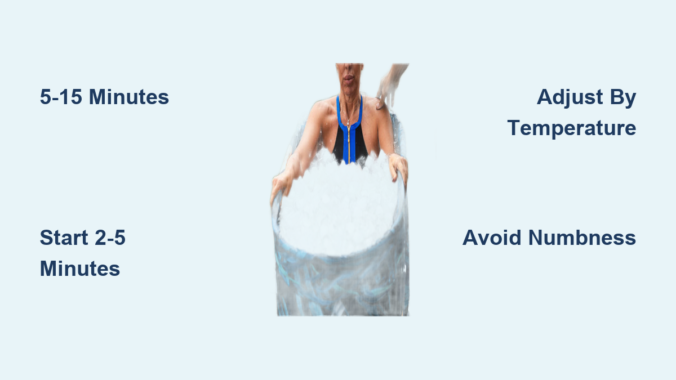
Mastering how long to take ice bath sessions requires understanding that more isn’t always better. For most practitioners seeking recovery and wellness benefits, 5-15 minutes in 50-59°F water delivers optimal results when practiced consistently. Begin conservatively with 2-5 minutes, progress gradually over weeks and months, and adjust based on your goals, experience level, and how your body responds.
Temperature and duration work together—colder water requires shorter exposure times, while slightly warmer water allows longer sessions. Never sacrifice safety for duration, and prioritize consistent practice over occasional marathon immersions. Build your cold tolerance progressively, respect warning signs, and recognize that sustainable practice beats aggressive attempts that lead to abandonment.
The journey into cold therapy rewards patience and consistency. Whether your goal is faster muscle recovery, improved mental resilience, or general wellness, these duration guidelines provide a framework for safe, effective practice. Start where you are, progress steadily, and enjoy the cumulative benefits that come from regular, well-calibrated cold exposure.
Leave a Reply