You’ve probably reached for your favorite bath and body spray only to wonder: how long does bath and body spray last before it goes bad? More importantly, how long will that refreshing scent actually stay with you after application? These are crucial questions for anyone who relies on these products for daily freshness. Whether you’re using a signature scent from Bath & Body Works or a drugstore body mist, understanding both the product’s shelf life and its performance duration on your skin helps you maximize value and avoid potential skin reactions from expired products.
The answer involves two distinct timelines that many consumers confuse: how long the product remains viable in the bottle versus how long the fragrance lingers on your skin. An unopened bottle can maintain quality for years under proper storage, while an opened container begins degrading from the first use. Meanwhile, the scent’s duration on your skin depends on concentration levels, your unique body chemistry, and application techniques. This comprehensive guide breaks down exactly what to expect from your bath and body spray at every stage—from unopened bottle to final spritz.
Unopened Bath and Body Spray Shelf Life
Most unopened bath and body sprays maintain optimal quality for two to three years from the manufacture date when stored correctly. Manufacturers conduct extensive stability testing to ensure their products remain chemically stable during this period in sealed containers. You can typically find the manufacture date printed discreetly on the packaging—often on the bottom of the bottle, the side of the box, or the crimp of aerosol cans—though formats vary between brands.
The sealed environment protects the delicate balance of fragrance oils, alcohol, and other ingredients from environmental factors that cause degradation. Without exposure to air, light, and temperature fluctuations, the chemical composition remains stable, preserving both the intended scent profile and product safety. However, even unopened products aren’t invincible—extreme storage conditions can compromise quality before you ever break the seal.
How Extreme Conditions Affect Unopened Products
If a sealed bottle experiences prolonged exposure to direct sunlight, extreme heat (like in a hot car during summer), or freezing temperatures, its internal chemistry can change despite remaining unopened. UV rays break down fragrance molecules, while temperature extremes cause ingredients to expand and contract, potentially compromising the seal or altering the formula. This is why you should check not just the manufacture date but also consider a product’s storage history before purchase.
Opened Body Spray Longevity
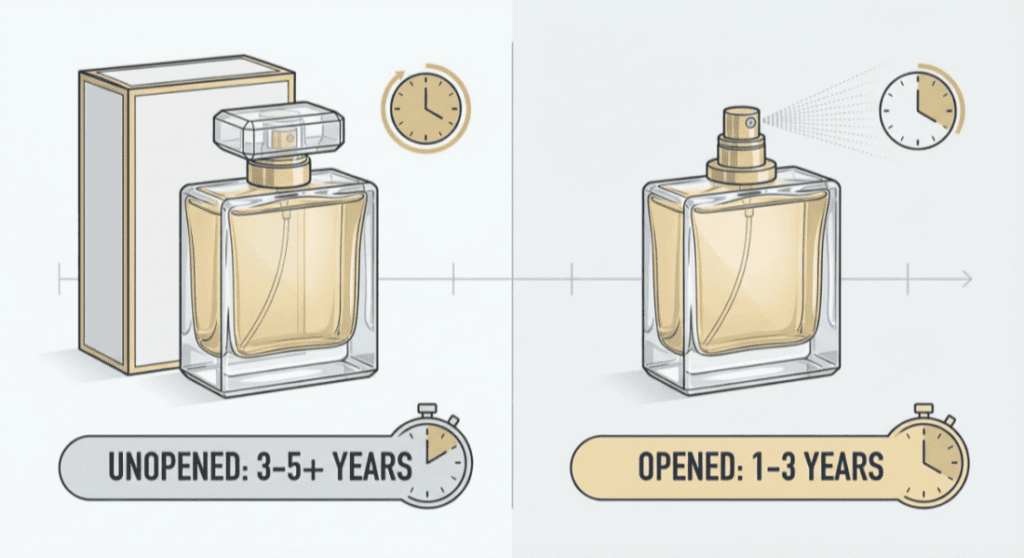
Once you remove the cap for the first time, your bath and body spray begins a countdown to expiration. Properly stored opened products typically remain effective for twelve to eighteen months, though this range can vary from six months to two years depending on usage patterns and storage conditions. Each time you spray, air enters the bottle, introducing oxygen that gradually oxidizes the fragrance compounds and changes the scent profile.
Why Body Sprays Degrade Faster Than Perfumes
Body sprays contain significantly lower fragrance oil concentrations—usually just one to three percent—compared to fifteen to twenty percent in traditional perfumes. This lower concentration makes body sprays more vulnerable to environmental factors and faster degradation. You might notice subtle changes after just a few months of regular use, with top notes fading first and the overall fragrance becoming less vibrant or developing an “off” smell that wasn’t present when the product was new.
Critical Storage Factors That Determine Spray Longevity

Your bathroom might seem like the logical place to store bath and body spray, but it’s actually one of the worst locations due to three destructive elements: light, heat, and humidity. Ultraviolet light breaks down fragrance molecules, causing both scent and color changes. Heat dramatically accelerates this degradation process, while bathroom humidity introduces moisture that can interact with water-soluble components and promote bacterial growth.
Ideal Storage Practices for Maximum Longevity
For optimal shelf life, transfer your bath and body spray to a cool, dark, dry location like a bedroom drawer or closet shelf away from windows and heating vents. Keep the cap tightly sealed when not in use to minimize air exchange, and store bottles upright to prevent leakage and maintain proper spray function. These simple practices can extend your product’s viable lifespan by several months compared to leaving it exposed on your bathroom counter.
Recognizing When Your Spray Has Expired

Your senses provide the most reliable indicators that your bath and body spray has passed its prime. The first sign is usually a noticeable change in the fragrance itself—original notes may disappear entirely, be replaced by unpleasant metallic or sour undertones, or simply smell “flat” and lacking complexity. This happens as volatile top notes evaporate first, followed by middle notes, leaving behind a distorted version of the original scent.
Visual Clues That Indicate Expiration
Clear sprays may become cloudy or develop visible sediment at the bottom of the bottle. Color changes, particularly darkening or yellowing, signal oxidation of the fragrance oils. If ingredients separate and don’t fully recombine with gentle shaking, this indicates the formula has broken down and components can no longer remain properly dispersed. For aerosol sprays, changes in spray pattern—like weak output, sputtering, or uneven distribution—may indicate internal corrosion affecting the mechanism.
Maximizing Fragrance Duration on Your Skin
Body sprays typically last two to four hours on skin before becoming imperceptible to others, though you may still detect it yourself longer due to olfactory fatigue. This duration varies significantly based on fragrance composition—lighter citrus and aquatic scents fade faster than heavier oriental or woody fragrances because their molecules evaporate more quickly from the skin’s surface.
How Your Body Chemistry Affects Scent Longevity
Individual factors like skin type, pH balance, body temperature, and even diet influence how long a fragrance lasts on you specifically. Oily skin generally holds scents longer than dry skin because natural oils help trap and slow the evaporation of fragrance compounds. Applying spray to pulse points—areas where blood vessels are close to the skin’s surface—enhances longevity by using your body heat to continuously release scent molecules into the air around you.
Professional Application Techniques for Extended Wear
Strategic application significantly extends how long your bath and body spray remains noticeable. Target two or three pulse points (wrists, neck, behind ears) with a single spray at each location rather than multiple sprays in one spot. Apply to moisturized skin—either after unscented lotion or using the matching body cream from the same fragrance line—as this creates a slightly oily barrier that slows evaporation.
Avoid These Common Application Mistakes
Rubbing your wrists together after application breaks down fragrance molecules faster than allowing them to dry naturally. Spraying directly onto clothing can stain fabrics and alters how the scent develops on your skin. Using excessive amounts creates an overwhelming initial burst that fades more quickly than a moderate application properly distributed across pulse points.
Comparing Different Spray Formulations and Durations
Not all bath and body sprays deliver the same longevity. Traditional alcohol-based body mists provide an immediate burst of scent that typically fades within one to three hours, prioritizing a light, refreshing experience over all-day wear. Oil-based body sprays and those with higher solvent concentrations last longer because heavier carrier oils slow evaporation.
Advanced Formulations for Extended Wear
Some modern body sprays incorporate fragrance encapsulation technology, where scent molecules are enclosed in microscopic capsules that break open gradually throughout the day. These advanced formulas can extend detectable scent duration to four or five hours—nearly double standard body mists—though they often come at a higher price point. Check ingredient lists for terms like “time-release technology” or “scent-lock” to identify these extended-wear options.
When to Replace Your Spray Despite No Obvious Signs
Even if your bath and body spray shows no visible or aromatic changes, certain situations warrant replacement. Products stored in extreme conditions—even briefly—may have degraded internally without obvious signs. Sprays that have sat unopened for more than three years past the manufacture date likely lost their intended fragrance profile. If you experience skin irritation after applying an older spray, discontinue use immediately regardless of appearance.
Practical Strategies for Maximizing Value
Track when you open new bottles with a small sticker or digital note to monitor exposure time—most body sprays remain at peak quality for about a year after opening. Purchase smaller sizes for fragrances you rotate seasonally to prevent multiple partially-used bottles degrading simultaneously. Organize your collection by season or occasion to ensure you use products before significant degradation occurs.
Key Takeaways for Optimal Bath and Body Spray Use
Understanding how long does bath and body spray last involves recognizing two distinct timelines: the product’s shelf life (two to three years unopened, six months to two years opened) and its skin duration (typically two to four hours). Proper storage in cool, dark, dry locations dramatically extends shelf life, while strategic application to pulse points on moisturized skin maximizes wear time. Watch for changes in scent, color, or consistency as reliable indicators of expiration, and replace products showing any signs of degradation to avoid potential skin reactions. By implementing these storage and application techniques, you’ll enjoy your favorite fragrances at their best while minimizing waste from premature product deterioration.
Leave a Reply