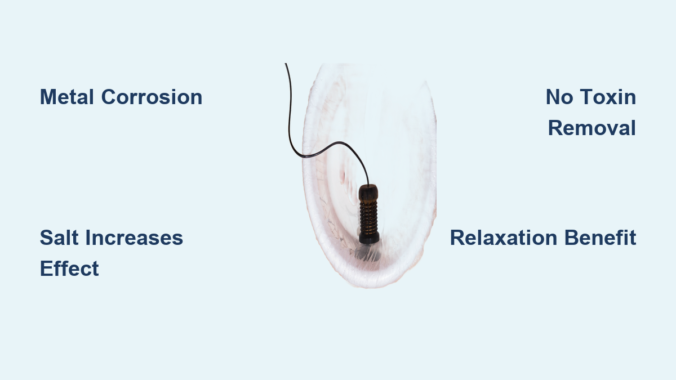
You’ve likely seen ionic foot baths advertised at spas and wellness centers, promising to draw toxins from your body through your feet. For $50-$75 per session, practitioners claim these devices zap heavy metals and environmental pollutants from your system using electrical currents. But when you ask “how does an ionic foot bath work” at a scientific level, the answer reveals a surprising disconnect between marketing claims and electrochemical reality. The visible color changes in the water after a session aren’t evidence of toxins leaving your body—they’re actually showing metals dissolving from the device itself. Understanding what’s really happening during these popular treatments can help you make informed decisions about whether they deliver the detoxification benefits they advertise.
The appeal of ionic foot baths stems from legitimate concerns about environmental toxicants that have accumulated in our bodies since the industrial revolution. With increased exposure to heavy metals and chemicals in our water, air, and soil, many people seek simple solutions to “cleanse” their systems. The promise of sitting back for 30 minutes while toxins magically exit through your feet is understandably attractive. However, peer-reviewed scientific research reveals that the electrochemical process occurring in these devices functions completely differently than advertised—and the residue you see in the water comes from the machine, not your body.
The Simple Electrochemical Process Behind the Device

Why Your Water Changes Color Without Feet Present
The most revealing evidence about how ionic foot baths actually work comes from controlled experiments where researchers ran the devices without any feet in the water. When scientists at the Canadian College of Naturopathic Medicine tested the IonCleanse SOLO system with just distilled water, they documented dramatic increases in metal concentrations. Chromium skyrocketed by 590,750%, nickel by 758,850%, and iron by 375,451.6%—all within just 30 minutes. These astronomical increases occurred without any human body present, directly contradicting the core claim that toxins are being extracted from users.
The key insight here is simple: the visible brown, rust-colored water and residue that practitioners point to as “toxins” actually come from the device’s own metal components corroding during the electrochemical process. When you add sea salt (as required by manufacturer instructions), you’re creating the perfect conditions for electrolysis that accelerates corrosion of the array’s metal parts.
How the Array Components Degrade During Treatment

The array assembly inside ionic foot baths contains specific materials that explain exactly what you’re seeing during a session. The metal plates stamped “316 SS” are made from 316 grade stainless steel, which contains chromium, nickel, and molybdenum—precisely the elements that show massive increases during operation. The copper rod also contributes to the electrochemical reaction. When electrical current (typically 13-20 volts and 1.8-2.2 amperes) passes through these components submerged in saltwater, it causes the metals to oxidize and dissolve into the solution.
This explains why the array has a limited lifespan requiring replacement after 30-50 sessions—the metal literally wears away with each use. The residue at the bottom of the tub isn’t your body’s toxins but corroded stainless steel and copper components from the device itself. If the water turns brown or orange, you’re witnessing iron oxide (rust) formation from the array’s metal plates, not evidence of detoxification.
Why Detoxification Claims Don’t Hold Up to Scientific Scrutiny
Testing With and Without Human Participants

When researchers compared ionic foot bath sessions with feet present versus without, they found virtually identical patterns of element release. In both scenarios, the same metals contained in the array components (chromium, nickel, iron) showed the most dramatic increases. Crucially, the presence of feet made no significant difference in the concentration or pattern of elements released into the water.
Six healthy participants underwent four weekly sessions as part of a controlled study, with water samples collected before and after each treatment. Laboratory analysis using Inductively Coupled Plasma Source Mass Spectroscopy (ICP-MS) confirmed that potentially toxic elements like aluminum, antimony, arsenic, and cadmium showed minimal changes that couldn’t be attributed to bodily detoxification. The essential elements category (calcium, magnesium, zinc) also showed relatively modest fluctuations—certainly not the massive depletion you’d expect if heavy metals were being extracted from the body.
The Critical Role of Salt in the Process
Understanding how does an ionic foot bath work requires recognizing the essential role of salt in the electrochemical reaction. Manufacturer instructions specify adding 1/8 teaspoon of sea salt to the water, which dramatically increases electrical conductivity. Without this salt, the current wouldn’t flow effectively between the electrodes. But this simple addition transforms the setup into an efficient electrolysis cell where the primary reaction is metal corrosion—not toxin extraction.
The salt essentially acts as an accelerator for the device’s true function: dissolving its own metal components into the water. This explains why the water changes color more dramatically when following manufacturer instructions precisely. The more salt you add (within reason), the more pronounced the visual effects—but these effects remain entirely unrelated to any detoxification process occurring in your body.
What Explains the Reported Benefits If Not Detoxification?
The Relaxation Effect of Warm Water Immersion
Many users report feeling better after ionic foot bath sessions, but this perceived benefit has a straightforward explanation unrelated to detoxification. The warm water (typically maintained at 39-40°C) promotes relaxation and temporarily improves circulation in the feet and lower legs. When you sit quietly for 30 minutes with your feet immersed in comfortably warm water, your body naturally enters a more relaxed state—regardless of whether an electrical current is present.
Your feet contain approximately 7,000 nerve endings, making them particularly responsive to sensory input. The combination of warmth, gentle electrical stimulation, and focused attention on your lower extremities creates noticeable physiological responses that users interpret as the treatment “working.” This is similar to why foot massages feel good—not because toxins are being removed, but because of the direct sensory and circulatory effects.
The Powerful Placebo Effect in Action
The ritualistic nature of ionic foot bath treatments significantly contributes to perceived benefits through psychological mechanisms. When you invest $75 in a session, visit a spa setting, and follow a prescribed protocol, your expectation of improvement creates measurable physiological responses—a well-documented phenomenon known as the placebo effect. The formal setting, practitioner attention, and dedicated time for self-care all combine to produce genuine feelings of wellness, even without the proposed detoxification mechanism being real.
This doesn’t mean people are “imagining” their improved feelings—placebo effects can trigger real physiological changes in the body. However, these benefits stem from the relaxation and ritual aspects of the experience, not from the device actually removing toxins as claimed.
Safety Concerns You Should Know Before Trying a Session
Metal Exposure During Treatment
The scientific evidence showing substantial metal release during ionic foot bath operation raises legitimate safety questions. The concentrations of chromium, nickel, and cobalt that leach into the water would be concerning if found in drinking water. While foot immersion poses different exposure risks than ingestion, individuals with metal sensitivities—particularly to nickel or chromium—should exercise caution.
The device’s FCC and CE certifications address electrical safety but don’t evaluate chemical exposure risks from the dissolved metals. Since the electrochemical process occurs regardless of whether feet are present, users are consistently exposed to these metal solutions during each session. For most healthy individuals, the exposure is likely minimal, but those with compromised kidney function or known metal sensitivities should consult their physician first.
Important Contraindications to Consider
Manufacturers specifically warn against ionic foot bath use for several groups who face potential risks. Individuals with pacemakers should avoid these devices due to the electrical current passing through water. Organ transplant recipients, those taking antiarrhythmic or anticoagulant medications, and pregnant or nursing mothers are also advised not to use ionic foot baths. These contraindications reflect legitimate safety concerns, even if the primary detoxification claims lack scientific support.
What You’re Actually Paying For in That $75 Session
When you understand how does an ionic foot bath work at the electrochemical level, you realize you’re paying for a pleasant relaxation experience rather than scientifically validated detoxification. The warm water immersion and dedicated self-care time provide genuine wellness benefits through established physiological mechanisms—improved circulation, stress reduction, and the placebo effect of believing you’re doing something positive for your health.
The next time you see dramatic “before and after” photos of ionic foot bath water, remember that the color changes result from the device corroding its own metal components—not from extracting toxins from your body. While these sessions may leave you feeling refreshed, that benefit comes from the same mechanisms that make any warm foot soak relaxing, not from any special detoxification process. If you’re concerned about heavy metal exposure, evidence-based approaches like consulting a medical professional for proper testing and treatment remain your most effective options.
Leave a Reply