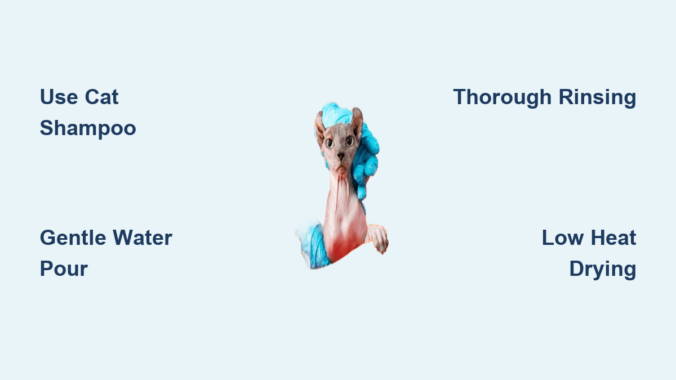
That musty odor developing on your hairless cat just days after their last bath? You’re not imagining things—this is the reality of caring for a Sphynx, Peterbald, or other hairless breed. Without fur to absorb and distribute natural skin oils, these unique felines develop greasy buildup that leads to unpleasant smells and potential skin problems. Many new hairless cat owners learn this lesson quickly when their previously clean-smelling companion starts leaving oily paw prints on furniture. The good news is that with the right approach, bathing your hairless cat can become a peaceful routine rather than a stressful battle. Most hairless cats actually learn to appreciate the warmth and attention once they associate bath time with positive outcomes.
This comprehensive guide walks you through every step of successfully bathing your hairless cat, transforming what could be a traumatic experience into a bonding opportunity that keeps your cat healthy and odor-free.
Gather Essential Bathing Supplies Before Starting
Preparation is critical when bathing a hairless cat—having everything within arm’s reach prevents unnecessary stress during the process. Hairless cats feel vulnerable in water, and stepping away to grab a forgotten item can escalate their anxiety significantly. Your complete bathing kit should include:
- Cat-specific shampoo formulated for sensitive skin (never use human products)
- Large cup or pitcher for gentle water application
- Soft washcloths for facial cleaning
- Multiple absorbent towels (hairless cats retain more water)
- Non-slip bath mat to prevent dangerous slips
- Treats for positive reinforcement
- Hair dryer set to low heat for drying
Warning: Avoid shampoos with sulfates, parabens, or artificial fragrances that can strip natural oils and cause skin irritation. Look for gentle formulas containing oatmeal or aloe vera to soothe sensitive skin during the bathing process.
Create the Perfect Bathing Environment
Setting up your bathing space correctly makes the difference between a smooth experience and a chaotic struggle. Begin by closing all doors and windows to prevent escapes, then place the non-slip mat firmly in your tub or sink. Fill with two to three inches of warm water (100-102°F) tested with your wrist—never introduce your cat to an empty tub that will later fill with water.
Having everything arranged within easy reach means you never need to leave your cat unattended. Some owners find that pre-warming towels in the dryer creates a cozy landing spot that reduces post-bath shivering. Remember that hairless cats are particularly sensitive to their surroundings, so a calm, controlled environment prevents traumatic associations with bathing.
Gradually Introduce Your Cat to Water
First baths require patience and gradual introduction—forcing a reluctant cat creates negative associations that persist for months. Start by letting your cat explore the empty tub on their own terms, rewarding exploration with treats. Once comfortable, add a small amount of warm water while staying nearby and calm.
Some successful techniques include:
– The “float test” where water fills slowly nearby while your cat observes
– Keeping initial water exposures brief (even 30 seconds counts as success)
– Using soothing tones and slow movements to avoid startling your cat
– Never forcing contact before your cat is ready
This patient approach builds trust and creates cats who view bathing as acceptable, if not enjoyable. Every hairless cat has unique water tolerance—some embrace baths immediately while others need weeks of desensitization training.
Proper Wetting and Shampooing Technique

Once your cat accepts water, use specific techniques to protect their delicate skin. Support your cat’s body securely with one hand while pouring warm water over their body with a cup. Never spray directly at their face, ears, or eyes—use a damp washcloth for these sensitive areas instead.
Apply a small amount of shampoo and work into a gentle lather, focusing on oil-prone areas:
– Base of the tail
– Chin and chest
– Paw pads
– Skin folds (where debris collects)
Massage slowly with deliberate movements rather than vigorous scrubbing. Keep one hand on your cat at all times to monitor comfort. If you notice trembling or escape attempts, pause and comfort your cat before continuing. Most hairless cats require bathing every one to three weeks depending on their individual oil production.
Thorough Rinsing Prevents Skin Problems
Residue left behind causes more problems than no bathing at all—thorough rinsing is critical. Soap residue leads to irritation, itching, and potential infections. Rinse by pouring clean, warm water repeatedly, feeling for slick areas that indicate remaining shampoo.
Pay special attention to:
– Skin folds
– Under the chin
– Between the toes
The rinse water should run completely clear before considering the bath complete. When you squeeze the skin gently, no bubbles or film should appear. Some owners find a final rinse with diluted apple cider vinegar (never on irritated skin) helps restore skin pH, but this should be used sparingly.
Complete Drying Is Essential for Hairless Cats

Drying requires more attention than with furry cats—exposed skin retains moisture that can lead to chills or bacterial growth. Begin by gently squeezing excess water with a thick towel, wrapping your cat securely while absorbing moisture, switching towels as needed.
For cats who tolerate it:
– Use a hair dryer on lowest heat setting
– Hold several inches from skin
– Move constantly to prevent hot spots
– Test air temperature on your hand first
Never use high heat—many hairless cats enjoy the warm airflow once acclimated. For dryer-averse cats, extended towel drying in a warm room works as an alternative. Check that skin is completely dry to the touch before allowing free movement.
Establish a Consistent Bathing Schedule
Hairless cats thrive on routine—consistent bathing makes each session easier. Most do well with bathing every 7-14 days, though individual factors influence ideal frequency. Watch for signs your cat needs bathing sooner:
– Excessive oily texture
– Musty odor
– Visible debris accumulation
Consider aligning bath day with other grooming activities like nail trimming. Keep a simple log of bath dates and skin observations to identify patterns. Kittens often need more frequent bathing as they develop adult oil production, while seniors may need schedule adjustments.
Solve Common Bathing Challenges
Even with preparation, some hairless cats present specific challenges. Cats who scratch often feel insecure—better support or a second person can help. Temperature sensitivity sometimes masquerades as water aversion, so double-check water temperature.
For cats who escape repeatedly:
– Try shorter, more frequent sessions
– Experiment with shallow versus deeper water
– Use alternative locations like a sink
For extreme resistance, waterless shampoos or specialized cat wipes can supplement full baths. Never punish resistance—work with your cat’s comfort level and gradually expand tolerance through positive experiences.
Maintain Skin Health Between Baths
Daily maintenance keeps your cat comfortable between full baths. Regular wiping with pet-safe cleansing wipes removes surface oil, especially on the chin, chest, and tail base. Monitor skin condition for healthy characteristics:
– Soft texture
– Warm (not hot) temperature
– Minimal greasiness
– No flaking or red patches
Maintain home humidity between 30-50% to support healthy skin. Some owners apply small amounts of cat-safe moisturizer to very dry areas, but only with feline-specific products to avoid harmful ingredients.
When to Seek Professional Grooming Help
Some hairless cats benefit from professional services, particularly those with extreme anxiety, physical limitations, or skin conditions. Seek professional help if:
– Bathing resistance becomes dangerous
– You’re unable to safely handle your cat
– Your cat has skin conditions needing medicated baths
Many veterinary clinics offer specialized bathing services. First-time owners often benefit from professional demonstrations of proper technique. Verify groomer experience with hairless breeds specifically—these cats require different handling than furry counterparts.
Final Thoughts on Hairless Cat Bathing Success
Bathing your hairless cat doesn’t have to be stressful. With proper preparation, patient introduction, and consistent routines, most hairless cats accept—and some enjoy—their regular bathing sessions. Their exposed skin depends on you for oil management that fur would naturally handle, making bathing an act of care rather than preference.
Start slowly, stay calm, and celebrate small victories. Your hairless cat looks to you for security during these vulnerable moments, and your patient approach builds trust that strengthens your bond. Within months, bath day may become one of your cat’s favorite activities—the warm water, your focused attention, and resulting comfort all contributing to a positive association you’ll both appreciate. Remember that each successful bath brings you closer to a routine where both you and your hairless companion view bath time as valuable bonding rather than a battle to endure.
Leave a Reply