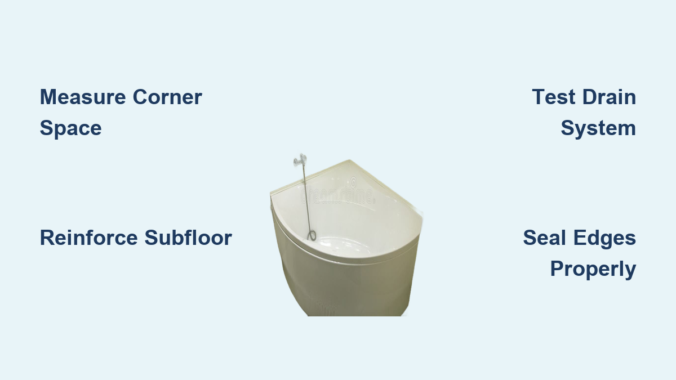
Corner baths transform cramped bathrooms into spa-like retreats by maximizing unused space while creating an elegant focal point. If your current bathtub feels outdated or your bathroom layout wastes valuable corner space, learning how to install corner bath fixtures properly becomes essential for both functionality and long-term enjoyment. This guide delivers precise instructions that prevent the most common installation mistakes—leaks, instability, and premature seal failure—that plague DIY bathroom projects. By following these steps methodically, you’ll create a professional-quality installation that withstands daily use without requiring costly repairs down the line.
Before reaching for your tools, understand that corner bath installation demands careful coordination between plumbing, structural support, and waterproofing. Unlike standard alcove tubs, corner units require precise diagonal positioning and specialized drain configurations that challenge even experienced DIYers. The average installer completes this project over two weekends, allowing proper curing time for sealants while maintaining a realistic pace. Rushing through critical phases like drain testing or waterproofing creates hidden vulnerabilities that manifest as water damage months later—damage that often requires tearing out walls to repair. Your patience now prevents expensive headaches later.
Verify Your Bathroom Layout Matches Corner Bath Requirements
Measuring your corner space with surgical precision prevents costly mistakes before purchasing your bath. Corner baths require specific clearance dimensions that differ dramatically from standard bathtubs. Begin by identifying your ideal installation corner, then measure from both walls toward the room’s center at 90-degree angles. Most corner baths need at least 58 inches along each wall with a diagonal front spanning 32-48 inches. Account for door swing, toilet placement, and vanity clearance—many homeowners forget to check if the bath obstructs door operation until it’s too late.
Evaluate your existing plumbing configuration before selecting a specific model. The location of your current drain pipe and water supply lines significantly impacts installation complexity. Corner baths typically position their drain near the diagonal front center, requiring either floor or wall drainage. Check if your existing plumbing stack aligns with potential bath positions—moving drain lines often requires professional plumbing work and permits. Also examine floor joist direction; corner baths weigh 300-500 pounds when filled, demanding solid support beneath the subfloor. If joists run parallel to your intended bath position, you’ll need to reinforce the subfloor with cross-bracing.
Consider accessibility and depth when comparing models. Corner baths range from shallow 14-inch soakers to deep 22-inch immersion tubs. Deeper baths provide better hydrotherapy but require more water and may challenge users with mobility issues. Review manufacturer specifications for weight capacity and mounting requirements—premium acrylic models often need more support than cast iron despite weighing less empty. Your chosen model must match both your structural capabilities and household needs to ensure years of reliable service.
Gather Specialized Tools for Corner Bath Installation

Assembling the right tools before starting prevents frustrating mid-project delays. For plumbing connections, you’ll need adjustable pliers, a pipe wrench, plumber’s tape, PVC primer, and cement. The carpentry phase requires a circular saw or jigsaw, drill with various bits, both torpedo and 4-foot levels, shims, and a rubber mallet. Waterproofing demands a caulk gun, 100% silicone sealant formulated for bathrooms, and potentially a waterproof membrane system depending on your bathroom’s construction.
Stock up on essential materials beyond the bath itself. You’ll require 2×4 lumber for support framing, plywood for creating a level base, and fiberglass insulation if installing over unheated space. Plumbing supplies include flexible supply lines, a drain kit compatible with your bath model, and shut-off valves if none exist. For sealing, purchase mold-resistant silicone caulk—standard acrylic caulks fail rapidly under continuous moisture exposure. Don’t forget safety gear: work gloves, safety glasses, and knee pads make the job more comfortable.
Double-check that your corner bath kit includes all necessary components. Most manufacturers provide the bath shell, decorative panels, drain assembly, and mounting hardware. However, faucet trim, shower kits, and support brackets often require separate purchase. Read the manufacturer’s installation requirements carefully before assuming anything is included, and verify return policies in case components arrive damaged or missing. Having everything ready prevents compromising on quality when you discover missing parts mid-installation.
Prepare Your Subfloor and Wall Structure

Clearing the work area completely gives you space to maneuver the heavy bath shell safely. Remove any existing fixtures in the corner, including old bathtubs, shower units, or storage cabinets. Protect adjacent flooring by covering it with cardboard—the installation involves heavy objects and messy materials like primer that damage finished surfaces.
Inspect and reinforce the subfloor to support your corner bath’s substantial weight. Remove existing flooring materials down to the subfloor, then check for water damage, rot, or structural weakness. Replace compromised sections with matching-thickness plywood, securing it firmly to floor joists with construction adhesive and screws. The subfloor must be perfectly level—use a long straightedge to identify high spots or depressions, sanding high areas and filling low spots with leveling compound.
Address wall conditions in the installation area by removing drywall to at least 8 inches above where the bath rim will sit. Expose the studs for secure mounting, checking for bowed or damaged studs that need replacement. If your bath requires backing for grab bars or faucet mounting, add blocking between studs at appropriate heights. Apply a waterproof membrane to wall surfaces that will contact the bath, extending at least 12 inches above the expected water line to prevent moisture intrusion.
Install Drainage System Before Positioning the Bath
Locating and preparing the drain connection point requires careful planning. Most corner baths feature an integrated drain near the diagonal front center, requiring a drain pipe extending through the floor or into an adjacent wall. Determine your drain route by examining the bath’s drain knockout location, then trace the path to your existing drain stack. This phase often requires professional assessment if your layout doesn’t align with existing plumbing.
Install the drain assembly by dry-fitting all components first to verify proper alignment. Apply PVC primer to connection surfaces, followed by cement, and join pieces quickly before the cement sets. Work methodically from the bath’s drain fitting through elbows and straight sections to your connection point, ensuring horizontal runs slope downward at 1/4 inch per foot for proper drainage.
Test the drain assembly before final installation to catch leaks while accessible. Fill the area with several inches of water, then observe connections for moisture. Check beneath with a flashlight and feel joints for dampness. Any detected leaks require disassembly, cleaning, and re-cementing—this step prevents hidden leaks that cause extensive structural damage before becoming visible.
Position and Secure Your Corner Bath Properly

Moving a corner bath requires at least two strong people—the average shell weighs 80-120 pounds. Lift from the bottom, never from rim edges. Position the bath in the corner, ensuring drain alignment matches your plumbing. Make minor adjustments now, as the bath becomes much heavier once connected.
Leveling demands precision affecting both function and appearance. Place a 4-foot level across the diagonal rim in multiple orientations. Most baths include adjustable feet or require shimming—add plastic shims beneath the base where needed, working in pairs to prevent cracking. Once level, secure feet to the floor using manufacturer-recommended hardware.
Anchoring to wall studs prevents movement that stresses seals. Most manufacturers provide mounting brackets that secure the bath rim to studs. Position brackets at specified intervals (typically 16 inches on center) and drive screws into studs. Avoid overtightening, which can crack the bath rim. Some designs also require securing the base to the floor with construction adhesive beneath the base.
Connect Water Supply Lines and Test Thoroughly
Running supply lines requires planning for both hot and cold water. If existing supply valves are distant, extend lines using PEX tubing (easiest for DIYers). Route supplies through wall cavities or beneath the floor with minimal bends.
Install shut-off valves within arm’s reach of the bath. Connect flexible supply lines from valves to faucet inlet fittings, using plumber’s tape on threaded connections. Hand-tighten connections, then use pliers for an additional half-turn—overtightening damages fittings.
Pressure-test connections before closing walls. Turn on water supply slowly, inspecting all connections for moisture. Operate the faucet through all functions, checking for drips. Any detected leaks require tightening or fitting replacement. Leave water supply on during subsequent phases to verify continued integrity.
Apply Waterproofing and Final Seals
Create watertight seals between the bath and walls to prevent moisture damage. Apply a continuous bead of 100% silicone caulk along corner angles where walls meet the bath rim, pressing firmly into gaps. For installations with trim pieces, install according to manufacturer instructions, then seal joints with silicone.
Seal the floor connection along the bath’s base perimeter. Apply a second bead of silicone along the floor-bath interface, hidden beneath the decorative front panel. Some installers also apply silicone around the drain flange from beneath the bath for backup protection.
Allow silicone to cure fully (24-48 hours) before using the bath. Check product specifications for exact cure times—rushing this phase causes seal failure during first use. Maintain bathroom ventilation to accelerate curing without applying heat that causes uneven drying.
Complete Installation with Panels and Final Testing
Install decorative panels by engaging manufacturer-provided clips or brackets, ensuring they sit flush without visible gaps. Apply silicone along the top edge to prevent water intrusion behind panels. Install faucets according to mounting style—deck-mounted through pre-drilled holes or wall-mounted at proper height.
Test systematically before final completion. Fill slowly while watching for leaks, reaching the overflow line and maintaining water for 30 minutes. Test the drain under flowing conditions while observing connections. Operate all fixtures through full functionality, checking for smooth operation and adequate flow.
Perform final inspection verifying all seals appear intact, hardware is appropriately tightened, and the bath sits securely without movement. Clean the bath interior and exterior thoroughly before first use. Your properly installed corner bath now delivers years of reliable service and luxurious bathing experiences.
Leave a Reply