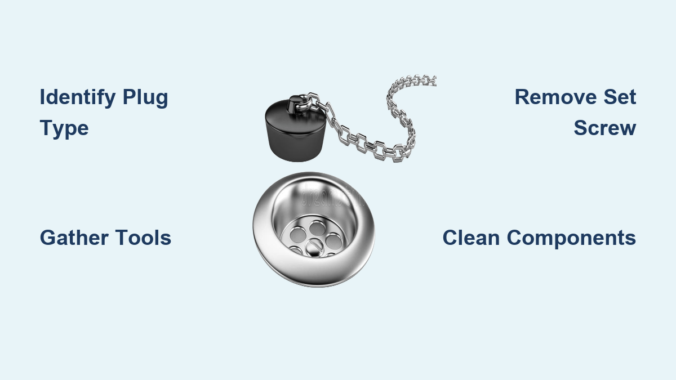
That stubborn bath drain plug that won’t budge can turn a relaxing bath into instant frustration. Whether you’re dealing with a clogged drain, performing a deep cleaning, or simply need to replace a worn-out stopper, knowing how to remove a bath drain plug is an essential home maintenance skill. Most drain plugs can be removed in under fifteen minutes with basic tools, yet many homeowners struggle simply because they don’t know what type of plug they have or the proper technique for their specific design.
This comprehensive guide covers every drain plug type found in modern bathrooms, from lift-and-turn stoppers to screw-in designs. You’ll learn to identify your plug type, gather the right tools, remove it safely without damaging your plumbing, and prevent future problems. By the end of this article, you’ll have complete confidence to tackle this common bathroom challenge.
Identify Your Drain Plug Type Before Removal
:max_bytes(150000):strip_icc()/bathtub-drain-stopper-types-2718995_FINAL-0e6bd206cdf84844a04c5edfbff5a957.jpg)
Before attempting any removal, you must identify which type of drain plug occupies your bathtub. Using the wrong technique can strip screws, break components, or damage the drain assembly—problems that quickly escalate from a simple DIY project to an expensive plumber call.
Lift-and-turn drain plugs feature a small knob on top of the stopper that you lift to open and twist to lock in place. The knob typically sits directly above the drain opening and has a visible set screw underneath or around its base. When you look at the drain, you should see a small metal knob that protrudes about half an inch above the surface. This design accounts for approximately forty percent of residential bathtub drains.
Push-pull stoppers work exactly as their name suggests: you push them down to close the drain and pull them up to open it. These plugs sit flush with the drain surface when closed and have no visible knobs or levers. The entire stopper body moves up and down, usually with a slight groove pattern on top to provide grip.
Toe-touch plugs activate by tapping them with your toe—hence the name. When closed, only a small flat or slightly curved surface is visible at drain level. Pressing it with your toe clicks the mechanism open or closed. These are popular in accessible bathrooms and modern installations.
Screw-in drain plugs feature a central screw that threads directly into the drain fitting. The head of the screw usually has a flathead slot, a Phillips cross, or a hex pattern for removal. These are less common in primary bathtubs but frequently found in guest bathrooms and older homes.
Gather Essential Tools for Successful Removal

Having the right tools before you begin prevents mid-project trips to the hardware store and reduces the risk of damaging your drain components. Most bath drain plug removals require only basic household items, though a few specialized tools make certain jobs easier.
For lift-and-turn stoppers, you’ll need a flathead screwdriver to access the set screw, needle-nose pliers to grip and remove the knob, and a pair of rubber gloves for grip. A small flashlight helps illuminate the set screw, which can be difficult to see in a dark drain. Some homeowners find that a magnet helps retrieve the small screw if it falls into the drain, so keep a strong magnet nearby as a precaution.
Push-pull and toe-touch stoppers typically require minimal tools—often just your hands. However, rubber gloves provide crucial grip if the stopper is slippery from soap scum or water. If the stopper has a removable cap or cover, you’ll need the appropriate screwdriver to access any fasteners.
Screw-in plugs demand the correct screwdriver or hex key that matches your fastener head. Testing several options quickly reveals which fits best; forcing the wrong tool strips the head and creates major complications. A pair of pliers with rubber-covered jaws can help grip rounded or slippery screw heads.
All removal projects benefit from a bucket or large bowl to catch residual water, old towels for cleanup, a small mirror to see into dark drains, and penetrating oil if the plug shows signs of corrosion.
Remove Lift-and-Turn Drain Plugs in 4 Steps
Lift-and-turn stoppers represent the most common design and, fortunately, one of the easiest to remove once you understand the mechanism. The key is locating and removing the tiny set screw that secures the knob to the drain stem.
Locate and Access the Set Screw
Begin by fully opening the drain plug to its maximum height. This positions the set screw in the most accessible location and gives you maximum grip on the knob. Look beneath the knob—you should see a small hex-shaped screw, typically either flathead or Phillips, recessed into a circular opening. This screw threads into the side of the drain stem and prevents the knob from being pulled off.
Apply penetrating oil to the set screw and let it sit for five to ten minutes if the plug hasn’t been removed in some time. Rust, corrosion, and accumulated hair can seize the screw in place. While you wait, put on your rubber gloves and gently try rotating the knob counterclockwise to loosen any debris before you touch the screw.
Remove the Set Screw
Insert your flathead screwdriver firmly into the set screw’s slot, positioning it so it fits snugly—the screw head is usually quite small, often only two to three millimeters wide. Apply steady pressure counterclockwise, turning only a quarter turn at a time. If the screw won’t budge, apply more oil and wait an additional five minutes. Never force a stripped set screw, as this requires professional extraction.
Once the set screw is fully removed, place it somewhere safe—a small container or taped piece of paper prevents it from rolling away or falling into the drain.
Extract the Stopper Mechanism
Grip the knob firmly with your pliers and pull upward with steady, even pressure. The knob and attached stem should slide out of the drain assembly. If resistance continues, check whether any additional fasteners exist or whether mineral deposits are binding the components.
With the plug removed, take a moment to clean the drain stem and surrounding area. Hair, soap scum, and debris often accumulate around the mechanism and contribute to future malfunctions. A quick scrub with an old toothbrush and baking soda paste keeps everything functioning smoothly.
Remove Push-Pull and Toe-Touch Stoppers
Push-pull and toe-touch stoppers lack the set screw mechanism of lift-and-turn designs, which makes their removal both simpler and more varied in approach. These stoppers either thread into the drain or secure with friction, and identifying which retention method applies to your situation determines your next step.
Identify the Retention Method
Begin by fully extending the stopper—pull it up to its maximum open position for push-pull designs, or tap it open with your toe for toe-touch models. Examine the top surface carefully for any visible screws, caps, or seams that might indicate how the stopper secures. Many push-pull stoppers have a small decorative cap covering a mounting screw, while others feature a simple friction fit.
Remove Friction-Fit Stoppers
For friction-fit stoppers with no visible fasteners, grip the stopper body firmly just above the drain surface and pull upward with steady pressure. These stoppers rely on tight tolerances and rubber gaskets to create a seal, so they require significant force to remove. Apply a penetrating spray if the stopper seems stuck, wait ten minutes, then try again with rubber gloves for enhanced grip. Twist the stopper slightly back and forth while pulling to help break any seal created by mineral deposits or corrosion.
Toe-touch stoppers often have a similar construction to push-pull models but sit flush against the drain surface when closed. Examine the top for a small indentation or slot that accepts a screwdriver tip. Some designs allow you to unscrew the entire mechanism by inserting a screwdriver into this slot and rotating counterclockwise.
Remove Screw-In Drain Plugs Properly
Screw-in drain plugs are exactly what they sound like: metal stoppers that thread directly into the drain fitting. Removal requires matching your tool to the fastener head and applying consistent rotational force in the correct direction.
Match Your Tool to the Fastener Head
Identify your fastener head type by examining the center of the plug. Most feature either a flathead slot running across the diameter, a Phillips cross pattern, or a hex socket for an Allen wrench. Some decorative designs use a specialty head that requires a specific tool—check for manufacturer markings that might indicate the required type.
Insert your chosen tool firmly into the fastener head, ensuring full engagement before applying force. For flathead screws, position the screwdriver so it sits snugly in the slot with no wobble. For Phillips or hex heads, the tool should click or seat solidly with no play.
Apply Proper Rotational Force
Rotate your tool counterclockwise to unscrew the plug. Apply steady pressure without forcing—if the plug won’t turn, apply penetrating oil around the edges where the plug meets the drain surface. Wait fifteen minutes for the oil to work into any corrosion, then try again. Heat from a hair dryer can also expand the metal slightly, potentially breaking the corrosion bond.
If the screw head is stripped and no tool engages, a rubber band placed between the screwdriver and the stripped head sometimes provides enough grip to turn a stubborn fastener.
Clean and Maintain Drain Plugs After Removal
Regular maintenance prevents the stuck plugs and malfunctioning mechanisms that lead to removal projects. Establishing simple cleaning habits extends the life of your drain hardware and maintains proper drainage between major cleaning sessions.
Weekly Drain Maintenance Routine
Remove visible hair and debris from the drain opening weekly using a drain hair snake or similar tool. Hair wrapped around drain mechanisms causes corrosion, creates foul odors, and eventually seizes components in place. A quick weekly removal prevents these problems from developing. Flush the drain with hot water for thirty seconds after each bath or shower to carry away loose debris before it accumulates.
Monthly Deep Cleaning Protocol
Monthly, remove the drain plug completely and clean all components thoroughly. Soak metal parts in a bowl of equal parts white vinegar and warm water for thirty minutes to dissolve mineral deposits. Scrub each piece with an old toothbrush, paying particular attention to threads, hinges, and any moving parts. Rinse thoroughly and dry completely before reassembly—moisture accelerates corrosion.
Apply a thin layer of petroleum jelly or plumber’s grease to moving components during reassembly. This lubrication prevents squeaking, reduces wear, and creates a moisture barrier that slows corrosion. Use only small amounts and wipe away any excess.
Removing a bath drain plug doesn’t require specialized plumbing skills or expensive tools. By identifying your plug type, gathering appropriate materials, and following the technique matched to your specific design, you can complete most removals in under thirty minutes. Regular maintenance prevents future problems, keeping your drain hardware functioning properly for years to come. When challenges exceed your comfort level or tools, professional assistance remains a sensible option that protects your plumbing investment.
Leave a Reply