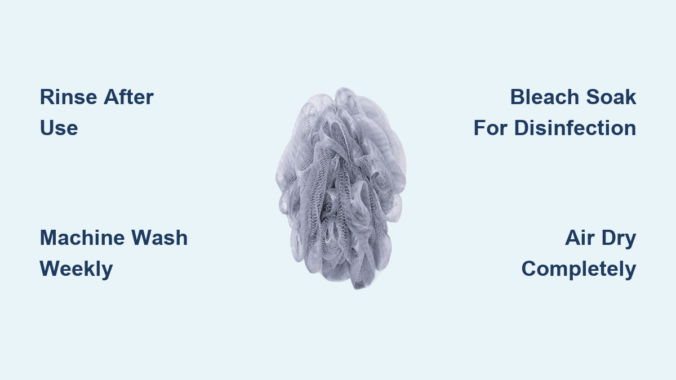
Your bath pouf creates luxurious lather and gentle exfoliation, but that same mesh texture that makes it so effective also traps bacteria, mold, and soap buildup. Learning how to clean bath poufs properly transforms them from potential health hazards into hygienic shower essentials. The average bath pouf harbors millions of bacteria per square inch, including harmful strains like Staphylococcus aureus and Pseudomonas aeruginosa, making regular cleaning a non-negotiable hygiene practice rather than just a cosmetic concern.
Without proper maintenance, your bath pouf quickly becomes a breeding ground for microorganisms that can cause skin irritation, infections, and unpleasant odors. Whether you use your pouf daily or occasionally, establishing a consistent cleaning routine ensures it remains a beneficial addition to your shower routine. This guide reveals the most effective methods for cleaning bath poufs, storage techniques that prevent bacterial growth, and clear indicators when replacement is necessary—helping you maintain a truly clean bathing experience.
Why Bath Poufs Need Regular Cleaning
Bath poufs collect dead skin cells, body oils, soap residue, and environmental contaminants every time you use them. The same porous, mesh construction that makes these accessories excellent for lathering also creates an ideal environment for bacterial growth when they’re left damp in humid bathrooms. Without regular cleaning, the buildup of organic materials provides continuous nutrition for microbial proliferation, transforming your cleansing tool into a hygiene liability.
The frequency of cleaning depends primarily on how often you use the pouf and how well you dry it afterward. Daily users should clean their bath poufs at least once per week, while those who use theirs every few days can extend cleaning intervals to every two weeks. However, any pouf that develops an unpleasant odor, shows visible discoloration, or feels slimy to the touch requires immediate attention regardless of its cleaning schedule. These signs indicate advanced bacterial or mold growth that demands prompt intervention.
Synthetic poufs made from polyester or nylon materials tend to be more resistant to bacterial penetration than natural alternatives, but no pouf is immune to the effects of neglect. Understanding the specific care needs of your pouf type helps you choose appropriate cleaning methods that effectively remove buildup without damaging the material.
Weekly Quick-Rinse Maintenance
Performing a quick rinse after each use significantly extends the time between deep cleanings and prevents excessive soap and debris accumulation. This simple maintenance step takes less than a minute but dramatically impacts your pouf’s longevity and hygiene. Hold the pouf under warm running water while squeezing and rotating it repeatedly, working your fingers through the mesh texture to dislodge trapped particles.
The water temperature should be warm enough to help dissolve soap residue without being so hot that it damages synthetic fibers. Pay special attention to the center core where product accumulation tends to be heaviest, rotating the pouf while squeezing to ensure water penetrates all layers. Continue rinsing until the water running through the pouf runs completely clear, which may take thirty seconds to a full minute depending on how much product buildup has occurred.
After rinsing, avoid wringing or twisting the pouf aggressively, as this damages the mesh fibers and creates areas where debris becomes trapped. Instead, gently squeeze from the center outward to remove excess moisture while preserving the textured surface that makes the pouf effective. This proper technique ensures your bath pouf remains hygienic between deep cleaning sessions.
Deep Cleaning Methods That Work
Machine Washing for Thorough Cleaning
The washing machine offers convenient and effective deep cleaning for bath poufs, particularly those that have developed persistent odors or visible buildup. Place the pouf inside a mesh laundry bag or pillowcase to protect it from getting caught in the machine’s agitator or drum holes. Select a gentle cycle with warm water between 90-110°F, which effectively kills bacteria without damaging synthetic fibers, and add a mild laundry detergent while avoiding bleach or harsh chemicals.
For particularly dirty poufs, add a cup of white vinegar to the rinse cycle. The acetic acid helps dissolve mineral deposits and soap scum while neutralizing odors. Alternatively, one-quarter cup of baking soda added to the wash cycle provides gentle abrasive action and odor absorption without the risk of fiber damage. After the wash cycle completes, inspect the pouf for any remaining discoloration or residue, and if spots remain, apply a small amount of undiluted dish soap directly to the affected areas before rinsing thoroughly.
Bleach Soak for Disinfection
When bath poufs develop stubborn discoloration, mildew stains, or persistent bacterial odors, a bleach solution provides powerful disinfection. Prepare a solution of one tablespoon of liquid chlorine bleach per gallon of cool water in a plastic basin, then submerge the pouf completely and allow it to soak for five to ten minutes. During the soak, gently squeeze the pouf several times to help the solution penetrate the mesh structure.
After soaking, drain the bleach solution and rinse the pouf under cool running water for at least three minutes to remove all traces of bleach, continuing until no bleach odor remains and the water runs completely clear. Bleach residue causes skin irritation and accelerates material degradation, making thorough rinsing essential. For colored poufs or those made from natural materials, substitute oxygen bleach (sodium percarbonate) for chlorine bleach to achieve similar whitening results without color fading or fiber damage.
Boiling Water Method
The boiling water method provides chemical-free disinfection effective for all pouf materials, including delicate natural sea wool. Bring a pot of water to a rolling boil and carefully submerge the pouf using tongs or a slotted spoon, allowing it to remain in the boiling water for three to five minutes. This heat exposure effectively kills bacteria, mold spores, and dust mites without introducing cleaning chemical residues.
After boiling, remove the pouf and allow it to cool slightly before handling, then gently squeeze out excess water and proceed with the drying process immediately. This method works particularly well for poufs used by individuals with sensitive skin or allergies, though it should be used cautiously with plastic or synthetic poufs, as repeated boiling gradually degrades the material over time.
Natural Cleaning Alternatives
Baking Soda Paste Treatment
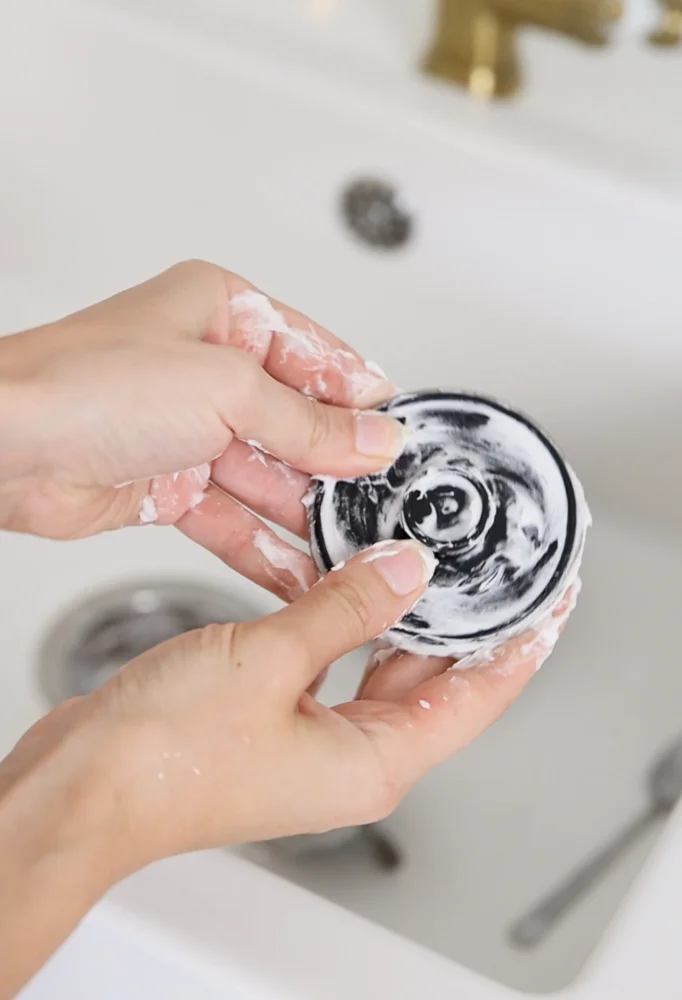
Baking soda serves as an excellent natural abrasive and deodorizer for bath pouf cleaning. Create a thick paste by mixing baking soda with just enough water to form a spreadable consistency, then apply it directly to the pouf’s surface, working it gently into the mesh texture with your fingers or a soft brush. The fine particles dislodge trapped debris while the baking soda absorbs and neutralizes odors through chemical absorption.
Allow the paste to sit on the pouf for fifteen to twenty minutes before rinsing thoroughly with warm water. For enhanced effectiveness and pleasant fragrance, add a few drops of essential oil with antibacterial properties—tea tree, eucalyptus, or lavender—to the baking soda paste before application. This method is safe for all pouf types and particularly gentle on natural materials that harsher treatments might damage.
Vinegar and Lemon Solution
White vinegar’s acidic properties effectively dissolve soap scum, mineral deposits, and hard water stains that accumulate on bath poufs. Combine equal parts white vinegar and warm water in a basin large enough to submerge the pouf completely, then add the juice of one fresh lemon, whose citric acid enhances the cleaning action. Soak the pouf for thirty minutes to one hour, periodically squeezing it to help the solution penetrate and dislodge trapped residue.
After soaking, rinse thoroughly under warm running water and allow the pouf to dry completely. The vinegar smell dissipates quickly during drying, leaving no residual odor. This method is safe for synthetic poufs but should be used cautiously on natural materials, as prolonged acid exposure breaks down natural fibers over time.
Tea Tree Oil Treatment
Tea tree oil possesses natural antifungal and antibacterial properties ideal for treating and preventing microbial growth in bath poufs. Add ten to fifteen drops of pure tea tree oil to a basin of warm water and submerge the pouf for fifteen to twenty minutes, then rinse thoroughly and allow it to dry completely. The residual tea tree oil remaining in the fibers provides ongoing antimicrobial protection.
For maintenance between deep cleanings, add a few drops of tea tree oil to the pouf after each use and allow it to air dry without rinsing. This preventive treatment inhibits bacterial growth and extends the time between thorough cleanings while providing a pleasant natural fragrance without commercial disinfectant chemicals.
Dry Your Poufs Properly
Proper drying is crucial for preventing the bacterial and mold growth that causes bath poufs to deteriorate and become unhygienic. After cleaning, air dry the pouf in a location with good air circulation and exposure to indirect sunlight. Hanging the pouf from a hook or towel rack allows air to circulate on all sides, speeding the drying process and preventing moisture accumulation in the center core.
Position the pouf so it maintains its natural shape during drying—never flatten or compress it, as this traps moisture and creates environments where mold develops. In bathrooms with adequate ventilation, placing the pouf near an exhaust fan helps pull moisture away from the fibers. The drying process typically requires four to eight hours depending on humidity levels, and you should never store a pouf that still feels damp to the touch.
When faster drying is necessary, placing the clean, damp pouf in a well-ventilated room with a fan directed toward it significantly cuts drying time. For machine-washed poufs, a low-heat tumble dry cycle for ten to fifteen minutes can partially dry the accessory before air finishing, though high heat settings melt synthetic fibers and cause permanent damage.
Smart Storage Solutions
Hanging Storage Methods
Proper storage between uses significantly impacts bath pouf longevity and hygiene. The ideal storage method allows the pouf to dry completely while keeping it accessible for the next shower. Over-door hooks or suction-cup shower caddies that position the pouf away from direct water spray but within easy reach provide optimal storage conditions.
Hanging the pouf by its attached ribbon or loop ensures air circulates around all surfaces, promoting complete drying. Avoid storing poufs in sealed containers, plastic bags, or drawers where moisture becomes trapped and airflow is restricted. Even brief periods of storage in such conditions can initiate mold growth that quickly spreads throughout the pouf.
Rotation and Replacement Scheduling
Maintaining multiple bath poufs and rotating between them allows each one to dry completely between uses, extending functional lifespan. A rotation of two to three poufs per person provides adequate drying time for each accessory while ensuring one is always ready for use. Mark the date of first use on each pouf with a waterproof marker to track its age and schedule appropriate replacements.
Even with excellent care, bath poufs eventually require replacement. Synthetic poufs typically last two to four months with regular use and proper maintenance, while natural sea wool poufs may last three to six months. Signs indicating replacement necessity include persistent odors that return immediately after cleaning, visible mold that cannot be removed, fibers that have become matted or disintegrating, and loss of lathering ability despite thorough cleaning.
Care for Different Pouf Types

Synthetic Mesh Poufs
Synthetic mesh poufs, the most common type made from polyester or nylon materials, offer the easiest maintenance and greatest durability. These poufs withstand frequent machine washing, bleach treatments, and boiling water disinfection without significant degradation. Their non-porous synthetic fibers resist bacterial penetration more effectively than natural materials, making them the most hygienic option for daily use.
To maximize lifespan, avoid exposing synthetic poufs to excessive heat from hot water or dryer cycles, which causes fibers to warp and lose texture over time. Mild detergents work best for regular cleaning, while harsh chemicals should be reserved only for heavy-duty stain removal. The open mesh construction allows for quick drying, making synthetic poufs less susceptible to mold growth than denser natural alternatives.
Natural Sea Wool Poufs
Sea wool poufs require gentler handling to prevent fiber damage and premature deterioration. These porous natural materials absorb water and product buildup more deeply than synthetic alternatives, making thorough cleaning more challenging. Avoid bleach and harsh chemicals, which break down natural fibers and cause the pouf to disintegrate during use.
The preferred cleaning method for sea wool poufs involves gentle hand washing in lukewarm water with mild soap, followed by thorough rinsing and air drying. Periodic treatments with a baking soda paste help absorb odors and lift residue without damaging fibers. Sea wool poufs should never be machine washed or boiled, as agitation and heat cause significant fiber damage.
Silicone Bath Puffs
Silicone bath puffs have distinct cleaning requirements due to their solid, non-porous construction. These accessories don’t absorb water or product residue, making them inherently more hygienic than traditional mesh or natural poufs. Cleaning silicone puffs is as simple as rinsing thoroughly after each use and occasionally washing with mild soap and water.
Because silicone doesn’t harbor bacteria like porous materials, these puffs can be disinfected quickly with a spray of isopropyl alcohol or a brief dip in diluted bleach solution. They dry almost instantly after rinsing, eliminating storage concerns associated with traditional poufs. Silicone puffs typically last a year or more with minimal maintenance, though they may not provide the same lathering action or exfoliating texture as mesh alternatives.
When to Replace Your Pouf
Even with excellent care and regular cleaning, bath poufs eventually reach the end of their useful lifespan. Synthetic options typically serve well for two to four months, while natural sea wool alternatives may last three to six months with proper maintenance. Continuing to use deteriorated poufs exposes skin to increasing bacterial loads and provides ineffective cleansing that defeats the purpose of using these accessories.
Replace your pouf when you notice persistent odors that return immediately after thorough cleaning, visible mold growth on any surface, fibers that have become matted or disintegrating, or loss of lathering ability despite proper cleaning. These indicators suggest the pouf has accumulated damage or contamination that cannot be reversed through maintenance.
Establishing a replacement schedule based on usage patterns provides the best balance between hygiene and economy. Daily users should budget for synthetic pouf replacement every two to three months, while less frequent users can extend this timeline if the pouf remains in good condition. Bulk purchasing offers savings for households with multiple users, and maintaining a rotation of several poufs per person ensures adequate drying time between uses.
Final Maintenance Checklist
Consistent maintenance habits ensure bath poufs remain hygienic and functional throughout their usable lifespan. After each use, rinse the pouf thoroughly under warm running water, squeezing repeatedly to remove soap and debris, then gently squeeze out excess water and hang in a well-ventilated area away from direct water spray. Never store a damp pouf in a closed container or sealed bag.
Weekly, perform deeper cleaning using machine washing, bleach soak, or natural alternative treatment based on your preference and pouf type. Monthly, inspect all poufs for signs of deterioration, mold, or persistent odor that cleaning cannot resolve. Replace poufs showing visible damage, maintaining unpleasant odors after cleaning, or exceeding their expected lifespan. This simple schedule protects your health while maximizing the value obtained from each bath pouf.
Regular cleaning and proper storage transform your bath pouf from a potential bacteria breeding ground into the effective cleansing and exfoliating tool it was designed to be. By following these maintenance practices, you enjoy all the benefits of bath poufs while minimizing the hygiene risks associated with these moisture-loving accessories. Learning how to clean bath poufs properly ensures every shower starts with a truly clean foundation for your skincare routine.
Leave a Reply